

You’re looking at financing options for your business, and the application asks whether you want an installment loan or revolving credit. If you’re staring at that question wondering what the difference actually means for your monthly payments and long-term finances, you’re not alone.
Here’s what matters: these two financing structures work in completely opposite ways. One gives you all the money at once with a payment schedule you’ll follow until the debt disappears. The other sets up a credit limit you can tap whenever you need it, pay back, and use again. Getting this choice wrong doesn’t just cost you money—it can put your cash flow in a bind for years.
Most business owners don’t realize that “small business loan” is an umbrella term covering both types. Your local bank might call their installment product a “business term loan” while an online lender brands their revolving option as a “flexible credit line.” Different names, fundamentally different products.
What Makes a Loan Installment vs Revolving
These financing types operate on opposite principles, starting with when you receive money and how you pay it back.
With installment financing, you get one transfer of the complete loan amount. The lender deposits (let’s say) $75,000 into your business account. From that day forward, you’re making monthly payments—same amount, same day of the month—until the original $75,000 plus interest is completely paid back. When you submit that final payment, the relationship ends. Need more money later? You’re filling out a new application.
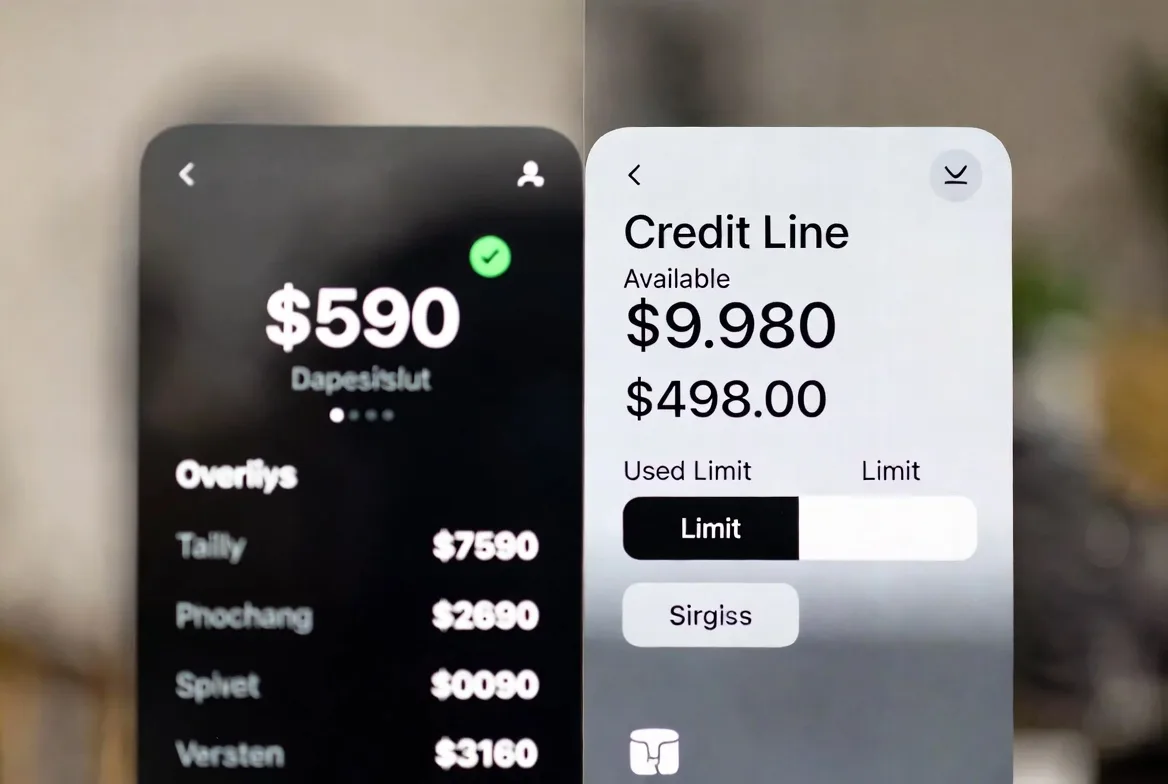
Revolving credit works more like a reservoir. The lender approves you for a maximum amount—maybe $50,000. You might pull $12,000 this month for inventory. Next month you pay back $5,000. Now you have access to $43,000 ($50,000 minus the $7,000 you still owe). Pay back another $7,000, and you’re back to the full $50,000 available. The credit doesn’t disappear when you use it; it refills as you repay.
Here’s the money difference: installment products charge interest on the full amount from day one. Revolving credit only charges interest on whatever you’ve actually withdrawn. Borrow nothing, pay nothing (though watch for annual fees).
How Small Business Installment Loans Work
Business installment financing delivers a predetermined sum of capital in one transaction. You’ll see that full amount hit your account, and you’ll know from day one what you’re paying monthly and exactly when you’ll make that final payment.
Most of these loans lock in your interest rate at signing. Your March payment costs the same as your November payment three years later. A minority of lenders tie rates to market indexes—when the prime rate moves, your payment moves—but fixed rates dominate small business installment products. Terms typically span 12 months to 10 years. SBA-backed real estate financing stretches up to 25 years.
Your payment gets split between the actual money you borrowed (principal) and the cost of borrowing it (interest). In year one, interest eats up more of each payment. By year five of a seven-year loan, most of your payment chips away at the principal. Accountants call this amortization. What it means for you: early payoff saves you substantial interest charges.
Businesses use installment products for purchases that cost too much to pay from operating cash flow: buying the building where you operate, replacing worn-out equipment, acquiring a competitor, overhauling your outdated point-of-sale system, or consolidating multiple high-interest debts into one manageable payment.
Amounts range from $5,000 micro-loans to multi-million-dollar facilities, depending on your financials, industry, time in operation, and what collateral you can pledge. A two-year-old landscaping company might qualify for $30,000. A manufacturer with ten years of tax returns and owned equipment could secure $800,000.

Types of Business Installment Loans
Traditional term loans deliver straightforward installment financing. Banks, credit unions, and online platforms offer these with one-to-ten-year repayment windows. The full sum lands in your account at closing; regular payments continue until the balance zeros out.
SBA loans—guaranteed by the Small Business Administration—follow installment structures with particularly attractive terms for qualified businesses. The 7(a) program goes up to $5 million with potential 25-year repayment for real estate acquisitions. The 504 program specifically targets fixed assets: buildings, major equipment, land. Government backing typically means lower rates, but expect more paperwork and longer approval timelines than conventional options.
Equipment financing uses the machinery, vehicles, or technology you’re buying as collateral. Because the lender can repossess the asset if you default, approval requirements relax and rates improve compared to unsecured products. Repayment terms usually match the equipment’s useful life—three years for computers, seven for manufacturing equipment.
Commercial real estate financing helps businesses buy or refinance property where they operate. Expect to put 20-30% down, with repayment stretching 15 to 25 years through monthly principal-plus-interest payments.
How Small Business Revolving Lines of Credit Work
A revolving credit facility establishes your maximum borrowing capacity, but you control when and how much you actually take. Say you’re approved for $75,000. You transfer $15,000 to cover a supplier invoice. That $15,000 starts accruing interest. The remaining $60,000? It just sits there available, costing you nothing in interest (though possibly triggering annual account fees).
After you pay back $8,000, your available credit jumps to $68,000. No reapplication needed, no approval delays. The credit replenishes automatically as your balance drops.
Lenders provide access through various channels: business checks you can write, cards you can swipe, or online platforms where you transfer funds into your operating account—often arriving the same day you request them.
Interest charges apply exclusively to your outstanding balance. Owe $30,000 on a $100,000 line? You’re paying interest on $30,000. Pay that down to $5,000 and your interest expense drops proportionally. Most business revolving products use variable rates tied to the prime rate plus a margin reflecting your credit risk—anywhere from prime plus 3% to prime plus 12%.
Watch out for fee structures beyond interest. Some lenders charge $50-150 annually whether you use the credit or not. Others assess fees each time you draw funds—typically 1-3% of the withdrawal. A few even charge “unused line fees” if you don’t borrow a certain percentage of your limit. Read the fee schedule before signing.
Credit lines usually run on one-year terms with automatic renewal. Your lender reviews your business’s financial condition annually, then renews and potentially adjusts your limit upward if revenue has grown or downward if performance has declined.
Businesses lean on revolving credit for situations where timing and flexibility matter: covering payroll when a major client pays 30 days late, stocking inventory before your peak season, handling emergency equipment repairs, or grabbing supplier discounts for paying cash upfront.
Key Differences Between Installment and Revolving Business Credit
| Feature | Installment Loan | Revolving Credit |
|---|---|---|
| How repayment works | Same monthly amount until fully repaid | Variable payments based on what you owe; must meet monthly minimum |
| Interest charges | Applied to entire loan balance from disbursement | Applied only to money you’ve actually borrowed |
| Getting your money | Complete amount deposited at closing | Draw what you need, when you need it, up to your limit |
| Reusing funds | Cannot reuse; must apply again for additional financing | Automatically replenishes as you pay down your balance |
| How long it lasts | 1–25 years depending on product type | Usually 1-year agreements that renew annually |
| Works best for | Major one-time purchases, capital investments, predictable budgeting | Cash flow gaps, seasonal needs, maintaining emergency reserves |
| Getting approved | Moderate to difficult; requires substantial documentation | Moderate; streamlined approval with periodic reviews |
| Credit bureau impact | Recorded as installment account; diversifies your credit mix | Recorded as revolving account; utilization percentage affects your score |
The credit reporting difference deserves extra attention. When you carry revolving credit, bureaus calculate what percentage of your limit you’re using. Borrow $40,000 against a $50,000 line and you’re at 80% utilization—a number that drags down your credit score. Keep that same line under 30% utilization (below $15,000 borrowed) and your score benefits. Installment products don’t generate utilization calculations; bureaus simply track your payment reliability and remaining balance.
Approval processes vary dramatically between these products. Installment financing—especially from traditional banks—often demands three years of business tax returns, detailed financial statements, business plans, personal financial disclosures, and collateral appraisals. You might wait four to six weeks for underwriting decisions. Revolving credit, particularly from fintech lenders, may approve you in 24-72 hours after analyzing your business bank account activity, verifying monthly revenue, and checking personal credit scores.
Which Type of Financing Is Right for Your Business
Go with installment financing when you’re making a substantial one-time investment. Buying a delivery truck, expanding into a larger facility, acquiring another company, or replacing your restaurant’s kitchen equipment—these scenarios match installment loan structures. You know precisely what you need the capital for, and you want the certainty of fixed payments that guarantee debt elimination by a specific date.
Installment structures simplify budgeting. Your payment stays constant (assuming you locked in a fixed rate), so you can build that obligation into your monthly expense projections. No surprises, no fluctuations. This predictability helps businesses operating on thin margins or owners who prefer conservative financial management.
The structure also enforces spending discipline. After you receive the deposit and make your purchase, you cannot access additional funds from that loan. You’ll need to live within your means or apply for separate financing. This limitation forces careful planning upfront but eliminates the temptation to lean on debt for everyday operating expenses.
Choose revolving credit when your capital needs shift month-to-month or when you want financial cushion for unexpected situations. Seasonal businesses see the biggest benefit—landscape companies that buy equipment and supplies in March but collect most revenue from April through October, or retailers who stock inventory in October for November and December sales. You draw funds when you need them, repay from revenue during busy periods, then repeat the cycle the following year.
Service-based businesses operating on project timelines frequently face gaps between when they pay expenses and when clients pay invoices. Contractors buy materials before collecting progress payments. Consultants cover travel and labor costs before invoicing at project completion. Revolving credit bridges these timing mismatches without the cost of paying interest on idle money sitting in your account.
That flexibility carries risks: variable rates often run 2-5 percentage points higher than comparable installment products, and the ease of accessing funds can create dependency. Businesses lacking financial discipline sometimes find themselves carrying persistent balances, never quite paying down to zero before the next expense hits.
I see businesses get into trouble when they mismatch the financing structure to the expense type. Using revolving credit to buy a $90,000 piece of equipment that’ll last ten years? You’re setting yourself up for years of expensive variable-rate debt. Taking a five-year installment loan when you really just need help with seasonal cash flow? You’re locked into payments during months when revenue disappears. The structure needs to match the business problem you’re solving.
Jennifer Morganstein
Ask yourself these questions before deciding:
- Am I funding a specific purchase or do I need ongoing access to capital?
- Can my cash flow support identical monthly payments, or do I need flexibility for slow periods?
- Will this investment generate revenue immediately or over multiple years?
- Am I disciplined enough to avoid carrying unnecessary revolving debt month after month?
- What matters more right now: lower interest rates or the ability to access funds on my schedule?
A bakery opening a second location needs installment financing for build-out costs—new ovens, refrigeration, furniture, signage. That same bakery might also want a $20,000 revolving line to manage flour and sugar purchases, bridging the gap between buying ingredients on Monday and collecting weekend sales revenue.
Can You Have Both Types of Business Financing
Plenty of growing businesses maintain both structures simultaneously without conflict. These products solve different problems and don’t interfere with each other when used appropriately.
You might carry a seven-year term loan for vehicles while maintaining a $40,000 revolving line for inventory management. The installment product handles your long-term capital needs with predictable monthly payments. The credit line provides short-term flexibility when expenses arrive before corresponding revenue.
Lenders evaluate each application on its own merits, though they’ll definitely consider your total monthly debt obligations when calculating your capacity to take on additional payments. Having an installment loan with 18 months of perfect payment history actually strengthens your revolving credit application—it proves you manage debt responsibly.
Your debt-service coverage ratio determines how much financing you can carry. Lenders calculate this by dividing your net operating income by total debt payments across all obligations. Most require minimum ratios of 1.25:1, meaning you generate $1.25 in operating income for every dollar in debt service. Add up all your existing monthly payments, factor in the new payment you’re applying for, and you’ll stay in the lender’s comfort zone as long as you’re above that 1.25 threshold.
Multiple credit types actually improve your business credit profile. Bureaus reward businesses successfully managing diverse credit products. Carrying both installment and revolving accounts—all with spotless payment records—signals financial sophistication and reliability to future lenders.
Managing multiple debts requires organization. Set up automatic payments for installment obligations so you never miss that fixed monthly amount. Monitor revolving credit carefully, paying down balances quickly to minimize interest and keep utilization low.
Never use revolving credit to make installment loan payments. This signals serious cash flow problems and creates a dangerous spiral where you’re effectively paying interest on interest. Each financing product should stand independently, supported by actual business revenue.

FAQs
Yes—these terms describe identical financing structures. “Business line of credit” and “revolving loan” both refer to arrangements where you can borrow up to a maximum limit, repay what you’ve borrowed, then access that credit again without reapplying. Some lenders prefer “line of credit” terminology while others use “revolving credit,” but the mechanics work exactly the same way. Interest applies only to whatever amount you’ve drawn, and your available credit automatically replenishes as you make payments.
Credit bureaus process these account types through different scoring mechanisms. Installment accounts don’t generate utilization ratios—agencies track your payment punctuality and how much of your original balance remains outstanding. Revolving accounts create utilization ratios by dividing your current balance by your total limit. Carrying balances above 30% of your limit hurts your score even when you pay every bill on time. Both product types contribute to your overall credit mix, and maintaining both types typically strengthens your profile more than having just one.
No—you cannot restructure an existing installment loan into revolving credit. These represent fundamentally different legal agreements with separate underwriting standards, interest calculations, and contractual obligations. If you decide you want revolving credit instead, you’d submit a separate application for a credit line. Some business owners pay off installment balances using newly approved revolving credit, but this rarely makes financial sense since revolving products typically charge 3-6 percentage points more than installment rates.
Revolving credit often moves through approval faster, but “easier” depends entirely on your specific business situation. Online lenders offering business lines of credit might approve you within 24 hours based on six months of bank account activity and monthly revenue verification, requiring minimal paperwork. Traditional installment loans—especially SBA products—demand extensive financial documentation and might take six to ten weeks from application to funding. That said, some fintech lenders now offer rapid installment approvals matching revolving credit timelines. Your credit score, operational history, and monthly revenue matter more than the product category for most lending decisions.
Installment products lock you into identical monthly payments on a predetermined schedule, offering virtually no flexibility in payment amounts (some lenders permit early payoff without penalties, but monthly amounts never change). You owe that same payment every month regardless of whether you just landed your biggest client or you’re going through your slowest quarter. Revolving credit provides substantial flexibility—pay only the minimum requirement during tight months, then eliminate large chunks of your balance when cash flow improves. You can even pay your entire balance to zero and owe nothing until you draw funds again. This adaptability makes revolving structures ideal for businesses with seasonal revenue swings or project-based income.
Early payoff consequences depend on what’s written in your loan agreement. Many contemporary business installment products permit prepayment without penalties, allowing you to eliminate interest charges by retiring the balance ahead of schedule. However, some lenders write prepayment penalties into their contracts—typically 2-5% of your remaining balance if you pay off before a specified period (often 24-36 months). Always review the prepayment clause in your agreement before signing. If you think you might want early payoff flexibility, negotiate to eliminate prepayment penalties during the application process or select a lender that doesn’t charge them.
Whether a small business loan is installment or revolving isn’t a matter of one universal answer—small business financing comes in both structures. Your specific capital needs, monthly cash flow patterns, and what you’re actually using the money for should drive your decision between these fundamentally different products.
Installment financing delivers lump-sum capital with predictable monthly payments, making it ideal for major purchases, equipment acquisition, real estate investments, and other capital expenses generating value over multiple years. You benefit from payment certainty and the satisfaction of a defined payoff date when the debt disappears completely.
Revolving credit facilities provide flexible capital access you can use, repay, and tap again as business conditions change. They excel at managing cash flow timing issues, seasonal inventory requirements, and unexpected opportunities or emergencies. Variable payment structures adapt to your revenue cycles, though they require more active management to avoid falling into persistent debt.
Many successful businesses deploy both financing types strategically—installment products for capital investments and revolving credit for operational flexibility. Understanding how each structure works, what each costs, and when to use which tool gives you the financial capability to grow your business without creating unnecessary cash flow pressure or paying more in financing costs than your situation actually requires.