

Figuring out whether you’re actually looking for a small business loan—or something else entirely—matters more than most entrepreneurs realize. I’ve seen business owners spend three months navigating SBA paperwork only to discover they needed a $75,000 equipment lease, not a $200,000 term loan. Others apply for microloans when their revenue and credit could’ve qualified them for better rates through conventional banking.
The U.S. Small Business Administration publishes official size benchmarks that separate small businesses from their larger counterparts, but here’s what catches people off guard: those standards shift depending on your industry classification. A 400-person manufacturer might clear the “small business” bar while a 100-employee consulting firm wouldn’t. Banks, credit unions, and online platforms each interpret these thresholds differently when they design loan products.
This breakdown covers the actual numbers, qualification criteria, and approval mechanics that define small business financing in 2026. You’ll walk away knowing which funding categories fit your company’s profile instead of guessing.
Definition and Loan Amount Thresholds
Small business loans target companies meeting size specifications set either by the SBA or individual financial institutions. The SBA approach bases eligibility on employee headcount or average annual receipts calculated across your previous three tax years—and the acceptable ranges swing wildly across sectors. Manufacturing operations might employ 500 people and still qualify as small, whereas retail businesses hit their ceiling much sooner.
Most products marketed under the “small business loan” label fall between $5,000 and $5 million. Microloans enter at $500 and stop at $50,000, serving very early-stage operations. The SBA 7(a) program—which represents the most popular government-backed route—allows up to $5 million, though actual approved amounts cluster around $500,000. SBA 504 loans push the ceiling to $5.5 million when you’re buying real estate or major equipment.
Here’s what distinguishes small business financing from commercial or corporate lending: underwriters examine the owner’s personal credit history closely and typically demand personal guarantees that link your personal assets to the business debt. Corporate lending focuses almost exclusively on company financials, projected cash flows, and business collateral without making individual credit scores a primary factor. Corporate facilities regularly exceed $10 million and involve complex stakeholder arrangements, while small business products stay concentrated below the $5 million threshold with faster documentation processes.
Different lenders interpret “small business loan” loosely. Any financing under $1 million might get that label regardless of whether your company meets SBA size definitions. A three-person software startup seeking $250,000 and a 200-employee distributor requesting $800,000 could both access products called small business loans despite operating at completely different scales.
Types of Small Business Loans
SBA 7(a) loans handle the widest range of purposes—working capital, equipment, real estate purchases, and refinancing existing debt. The SBA backs 85% of loans under $150,000 and 75% of anything larger, which cuts the lender’s exposure. You’ll get terms stretching to 10 years for working capital needs and 25 years for property, with interest rates running from prime plus 2.25% up to prime plus 4.75% depending on loan size and your profile.
SBA 504 loans zero in on fixed asset acquisitions: commercial real estate, heavy machinery, or substantial facility improvements. The financing gets divided three ways—a bank covers 50%, a Certified Development Company puts up 40%, and you contribute the remaining 10% down payment. The CDC portion carries below-market rates locked for 20 or 25 years, which makes this structure especially attractive for owner-occupied commercial property.

Microloans deliver up to $50,000 through nonprofit intermediaries, with typical transactions hovering around $13,000. They’re built for startups, home-based operations, or founders with thin credit files. You’ll repay over six years maximum, facing rates between 8% and 13%. Many microloan organizations throw in free mentoring or business coaching alongside the capital.
Term loans from banks or online lenders give you a lump sum that you repay on a fixed schedule, usually one to five years. Banks prefer established businesses with solid credit, pricing these loans from 6% to 12%. Online lenders approve applications faster but charge 10% to 30%—sometimes higher—particularly when credit issues are present.
Lines of credit work like business credit cards, giving you revolving access up to a predetermined limit. Withdraw only what you need and pay interest solely on whatever’s outstanding. Banks extend lines from $10,000 to $500,000 starting around 8%, while online alternatives go higher but approve more flexibly.
Equipment financing uses your purchased asset as loan collateral, which eases approval for businesses lacking other security. Lenders advance 80% to 100% of the equipment’s value across terms matching its useful lifespan—three to seven years for most machinery. Rates span 6% to 20% based on creditworthiness and the specific equipment type.
Eligibility Requirements for Small Business Loans
Lenders assess five primary elements when screening small business loan applications: credit history, how long you’ve operated, revenue performance, available collateral, and ownership structure.
Credit score minimums shift by loan category and lender. SBA 7(a) loans generally want personal scores of 680 or better, though some lenders accommodate 640 if you’ve got strong cash flow or substantial collateral compensating for the lower score. Traditional bank term loans expect 700-plus. Online lenders might approve borrowers in the 600 to 650 range while charging steeper interest rates. Microloans occasionally work with scores down to 575 when your business concept shows promise.
Time in business standards protect lenders from the elevated failure rates of brand-new companies. Most SBA loans call for two years of operation, although standout applicants sometimes squeeze through with one year. Banks prefer seeing three years of tax returns and financial statements. Online lenders occasionally approve businesses running just six months, but you’ll pay premium rates and accept shorter terms. Microloans and select SBA programs specifically accommodate startups, asking for detailed business plans instead of operational track records.
Annual revenue thresholds confirm your business generates enough cash to handle debt payments. Many lenders set a floor of $100,000 in annual revenue, though microloans and startup-focused programs may go lower. SBA loans frequently require $250,000 or more in receipts, looking for debt service coverage ratios (net income divided by total debt obligations) of at least 1.25:1. Translation: your business should produce $1.25 in cash flow for every $1 you’ll owe in loan payments.
Collateral demands depend on how much you’re borrowing and which product you choose. SBA 7(a) loans under $25,000 don’t ask for collateral, but bigger amounts need liens against whatever business assets you’ve got. Real estate, equipment, inventory, and receivables typically secure these loans. Lenders usually advance 70% to 80% of collateral value, meaning a $200,000 loan might require pledging $250,000 to $285,000 worth of assets. Unsecured products exist through online lenders but come with rates of 15% to 40%.
Personal guarantees show up in nearly all small business loans, putting owners on the hook personally when the business can’t repay. Anyone holding 20% or more ownership stake will sign personal guarantees for SBA loans. Your personal assets—house, savings accounts, investment portfolios—become vulnerable if the business defaults. Some online lenders advertise no-personal-guarantee products, though you’ll face considerably higher costs and lower approval odds.
Business Size Standards by Industry
The SBA adjusts these standards periodically as economic conditions shift. These limits control eligibility for SBA loan programs, government contracts, and certain grant opportunities:
| Industry | Employee Limit | Revenue Cap (Annual) |
|---|---|---|
| Retail Trade | 500 employees | N/A |
| Manufacturing | 500–1,500 employees* | N/A |
| Professional Services | N/A | $8M–$22M* |
| Construction | N/A | $16.5M–$45M* |
| Hospitality (Hotels, Restaurants) | N/A | $8.5M |
| Healthcare & Social Assistance | N/A | $8M–$41.5M* |
*Specific NAICS codes within each industry category determine the exact threshold
A residential builder bringing in $30 million annually still qualifies as small under SBA definitions, whereas a consulting practice hitting $25 million crosses the line. These classifications directly affect your access to SBA loan programs, which usually deliver lower rates and extended terms compared to standard commercial financing.
How the Small Business Loan Application Process Works
The path from application to funded account follows a recognizable pattern, though timelines vary dramatically depending on your lender and chosen product.

Pre-qualification begins with basic information: annual revenue, operational tenure, rough credit score range, and how much you want to borrow. Lots of lenders now offer online pre-qualification that returns a preliminary decision anywhere from instantly to 24 hours later without dinging your credit score. This soft credit check helps you gauge your chances before investing hours into a full application. Online lenders frequently provide instant pre-qualification feedback, while banks may take several days responding.
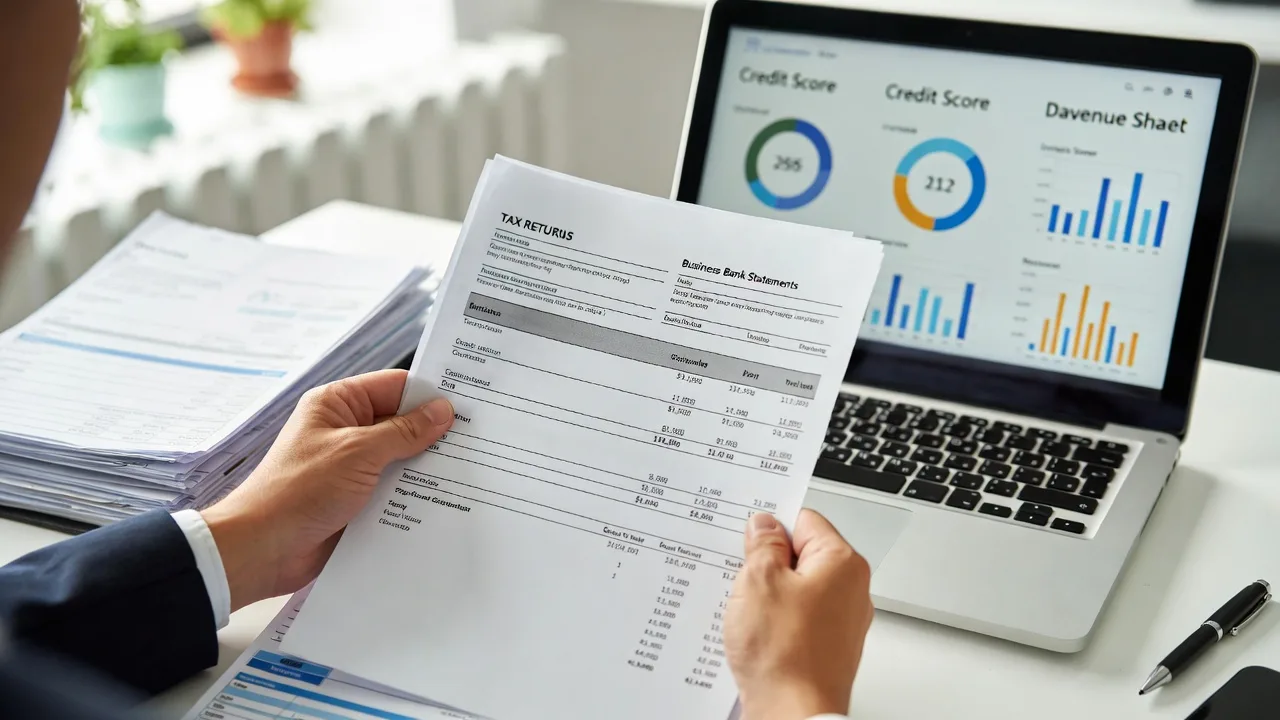
Full application means compiling extensive documentation. You’ll need two to three years of business tax returns, personal returns for everyone with ownership stakes, profit and loss statements, balance sheets, three to six months of bank statements, business licenses, and incorporation documents. SBA loans add a business debt schedule listing all current loans, personal financial statements, and a comprehensive business plan when you’re requesting north of $500,000. Gathering this paperwork takes most applicants one to three weeks.
Underwriting is where lenders verify everything you’ve submitted and calculate their risk exposure. Banks and SBA lenders pull business credit reports from Dun & Bradstreet, Experian Business, or Equifax Business, plus personal reports for everyone signing guarantees. They scrutinize cash flow patterns, run debt service coverage calculations, cross-check tax returns against IRS transcripts, and appraise any collateral you’re pledging. Underwriters reach out to suppliers and customers you’ve listed as references and frequently request clarifying documentation when something doesn’t line up. This stage runs two to four weeks for online lenders, four to eight weeks for banks, and eight to twelve weeks for SBA loans.
Approval and closing involve final document review and executing loan agreements. Banks and SBA lenders usually require face-to-face closings with notarized signatures, whereas online lenders handle everything electronically. You’ll examine the promissory note, security agreement (for collateralized loans), personal guarantee paperwork, and disclosure forms spelling out every fee and term. Pay close attention to prepayment penalty clauses—some lenders hit you with 2% to 5% of your remaining balance if you pay off early.
Funding schedules range from same-day for certain online lenders to 30 days after closing for SBA loans. Term loans and equipment financing typically fund one to five business days post-closing. Credit lines activate right away, letting you access funds immediately. SBA 504 loans take longest because you’re coordinating between multiple parties—the bank, Certified Development Company, and borrower.
Total elapsed time from application to money in your account: online lenders average two to seven days, traditional banks need three to six weeks, and SBA loans run two to four months. Emergency circumstances might push you toward expedited options, but you’ll pay premium rates for that speed.
Real-World Examples of Small Business Loan Use Cases
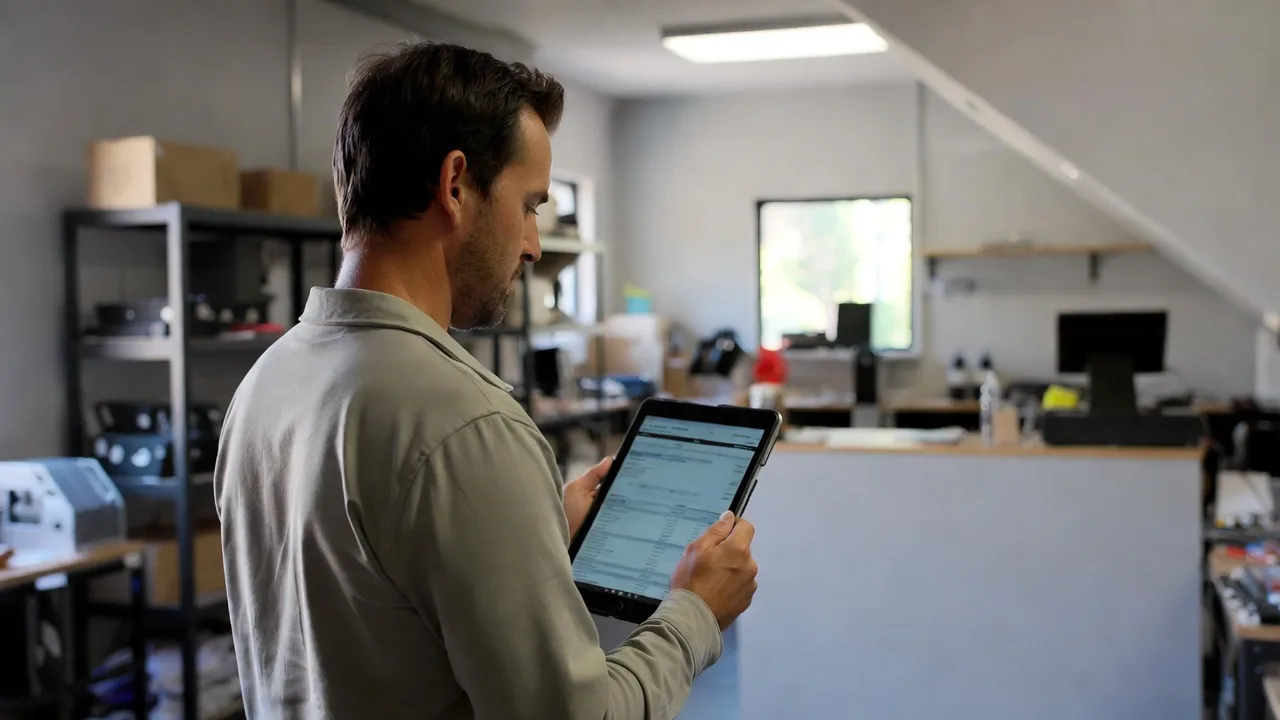
Retail expansion: A boutique clothing store running two locations with $850,000 in yearly revenue wanted a third storefront. The owner landed a $175,000 SBA 7(a) loan structured over 10 years at 8.5%. The capital covered security deposits on the new lease ($15,000), construction and fixtures ($95,000), opening inventory ($45,000), and three months of operating expenses ($20,000). Monthly payments ran approximately $2,150, which fit comfortably within cash flow projections showing the new location would break even within eight months.
Equipment purchase: A landscaping company generating $1.2 million needed to replace worn-out equipment. The owner secured $85,000 through equipment financing for two commercial mowers ($35,000), a truck ($40,000), and trailers ($10,000). The lender structured this as a five-year loan at 9.2% using the equipment itself as collateral, so no additional security was necessary. Monthly payments of $1,770 aligned with the seasonal revenue pattern, and depreciation deductions helped offset the interest expense.
Working capital: A manufacturing business doing $2.4 million in sales hit a cash crunch when their biggest customer stretched payment terms from 30 to 60 days. The owner established a $150,000 line of credit at 10.5% through a regional bank. Instead of drawing the full limit, the business tapped $60,000 to $90,000 during tight periods and paid it back when receivables arrived. Interest charges averaged $600 to $900 monthly on whatever balance was outstanding—far cheaper than missing payroll or stalling supplier payments.
Common Mistakes When Applying for Small Business Loans

Poor credit preparation kills applications before underwriters even look closely. Plenty of owners check their credit score but skip reviewing their actual credit report, missing errors that drag down their number. Dispute any inaccuracies 60 to 90 days before applying—corrections don’t happen overnight. Pay credit card balances below 30% of your limits (below 10% is even better) at least two months before you apply, since credit utilization ratios heavily influence scores. Skip opening new credit accounts or making big purchases in the six months leading up to your application, as these create hard inquiries and suggest financial stress.
Incomplete documentation frustrates underwriters and drags out decisions. Build a loan application checklist and collect every document before you start the application. One missing bank statement can tack two weeks onto the process while you track it down and resubmit. Organize files chronologically with clear labels—”2025_Business_Tax_Return.pdf” works better than “taxes.pdf.” When your bookkeeping is messy, hire an accountant to prepare clean financials before applying. That $500 to $1,500 investment pays for itself through faster approvals and stronger terms.
Wrong loan type burns time and potentially hurts your standing with other lenders. Don’t chase an SBA 7(a) loan when you need funding within two weeks—the timeline doesn’t work. Skip term loans for fluctuating expenses that a line of credit handles better. Equipment financing beats general-purpose loans for asset purchases since the collateral strengthens your case. Microloans make sense for $15,000 needs but get expensive and limiting when you actually need $75,000. Match the specific product to your particular situation instead of applying for whatever looks easiest.
Unrealistic amount requests broadcast poor planning. Requesting $300,000 against $400,000 in revenue raises questions about repayment capacity. Lenders follow rules of thumb: loan amounts typically shouldn’t exceed 25% to 50% of annual revenue depending on your profitability and existing obligations. Asking for too little backfires too—if you actually need $100,000 but request $60,000 hoping to boost approval odds, you’ll run short and have to reapply, burning time and money. Build a detailed budget demonstrating exactly how you’ll deploy funds and how the investment generates returns. Precision impresses lenders.
FAQs
SBA 7(a) loans cap at $5 million, and SBA 504 loans reach $5.5 million for eligible projects. Traditional bank term loans marketed toward small businesses typically max out at $5 million, though some banks stretch to $10 million for long-standing clients. Online lenders usually top out between $500,000 and $2 million. Microloans are capped at $50,000. Your realistic maximum hinges on business revenue, credit profile, and available collateral—most lenders won’t approve loans exceeding 30% to 50% of your annual revenue without extraordinary circumstances.
Minimum scores shift by product type: SBA 7(a) loans generally require 680 or above, though some lenders work with 640 when compensating strengths exist. Traditional bank loans look for 700-plus. Online lenders might approve scores from 600 to 650 while charging substantially higher rates—think 15% to 30% instead of 7% to 12%. Microloans can work with scores as low as 575. Below 600, you’re looking at merchant cash advances and very short-term financing with effective rates above 40% APR. When your score sits below 650, invest three to six months improving it before applying—paying down debt and fixing errors can boost your score 30 to 50 points, potentially saving thousands in interest charges.
SBA loans carry partial government guarantees (75% to 85% of the loan value), which lowers lender risk and enables better terms—lower interest rates, longer repayment windows (up to 25 years), and smaller down payments. Traditional bank loans lack this government backing, so banks offset their risk through stricter requirements, higher rates, and shorter terms (typically three to seven years). SBA loans involve heavier paperwork and extended approval timelines because of government compliance obligations. Traditional loans process faster but may demand more collateral or higher credit scores. Choose SBA loans when you need optimal terms and can tolerate the wait; go traditional when you need faster funding or don’t satisfy SBA eligibility standards.
Yes, though your options contract and costs climb substantially. Online lenders approve credit scores from 600 to 650, charging rates between 15% and 40% depending on how far your score drops. Merchant cash advances and revenue-based financing don’t enforce strict credit minimums but extract 20% to 60% in effective annual costs. Secured loans backed by equipment or real estate may work with scores in the 580 to 620 range. Microloans sometimes accommodate scores below 600 if you complete their business training. Below 550, you’re looking at personal loans, credit cards, or alternative setups like invoice factoring. The smarter play: postpone borrowing for six months while you repair credit, pay down existing balances, and fix report errors. The interest savings on a loan obtained with a 680 score versus a 600 score can exceed $10,000 on a $100,000 loan.
Small business loans cover a broad spectrum of financing products designed for companies meeting particular size benchmarks, typically involving amounts from $5,000 to $5 million. The SBA publishes official thresholds based on employees or revenue by industry sector, but individual lenders use their own internal criteria when categorizing and approving these loans.
Your route to appropriate financing starts with understanding which size category your business occupies, then matching that profile to loan types aligning with your credit strength, operational history, and funding timeline. SBA loans provide optimal terms for borrowers who qualify and can wait two to four months, while online lenders deliver speed at premium pricing for urgent situations.
Success requires groundwork: clean up your credit profile, organize financial documentation systematically, calculate realistic loan amounts based on cash flow capacity, and select the loan type matching your specific use case. The difference between approval and rejection often traces back to these controllable factors rather than arbitrary lender decisions.
Most critically, recognize that “small business loan” describes a category, not a single product. A $20,000 microloan for a home-based consultant and a $2 million SBA 7(a) loan for a manufacturing expansion both qualify as small business financing, yet they serve completely different purposes with distinct qualification requirements. Define your needs precisely, then pursue the specific solution matching your situation rather than applying broadly and hoping something sticks.