

You need money to launch your business. Maybe $75,000 for inventory and equipment. Perhaps $200,000 to open a retail location. Conventional banks will probably turn you down—they want established revenue and years of tax returns you don’t have yet.
That’s where SBA-backed financing enters the picture. These loans aren’t perfect, and the application process will test your patience. But they’ve funded hundreds of thousands of startups that couldn’t access capital any other way. Lower down payments than conventional loans. Longer payback windows. Approval criteria that account for your potential, not just your past.
The catch? You’ll need to understand how the system actually works, which loan program fits your situation, and what documentation will make or break your application.
Let’s break down exactly what you’re getting into.
What Is an SBA Loan for New Businesses?
The Small Business Administration doesn’t write checks to entrepreneurs. Never has. Here’s the actual structure: you borrow from a regular bank or credit union, and the SBA promises to cover 75-85% of the loan if you default.
That government guarantee changes everything. Banks suddenly become willing to lend to someone with no business tax returns, no established revenue, and no proof that customers actually want what you’re selling. The risk doesn’t disappear—it shifts partially to taxpayers.
You’ll still go through a conventional lender for everything. They process your application, make the approval decision, transfer the funds, and collect your payments. The SBA reviews the deal to confirm it meets their rules but doesn’t interact with borrowers much.
Why does this matter for startups specifically? Most business lenders require two full years of financial statements showing profitability. You obviously can’t provide those. When the SBA loan for new business explained gets stripped to its essence, you’re getting approved based on personal creditworthiness, relevant work experience, and how convincingly you’ve thought through your business model. That’s fundamentally different from traditional commercial lending.
The government takes on 75-85% of the loss exposure (depending on loan size), so your bank can say yes to deals they’d normally reject immediately.
Types of SBA Loans Available to New Businesses
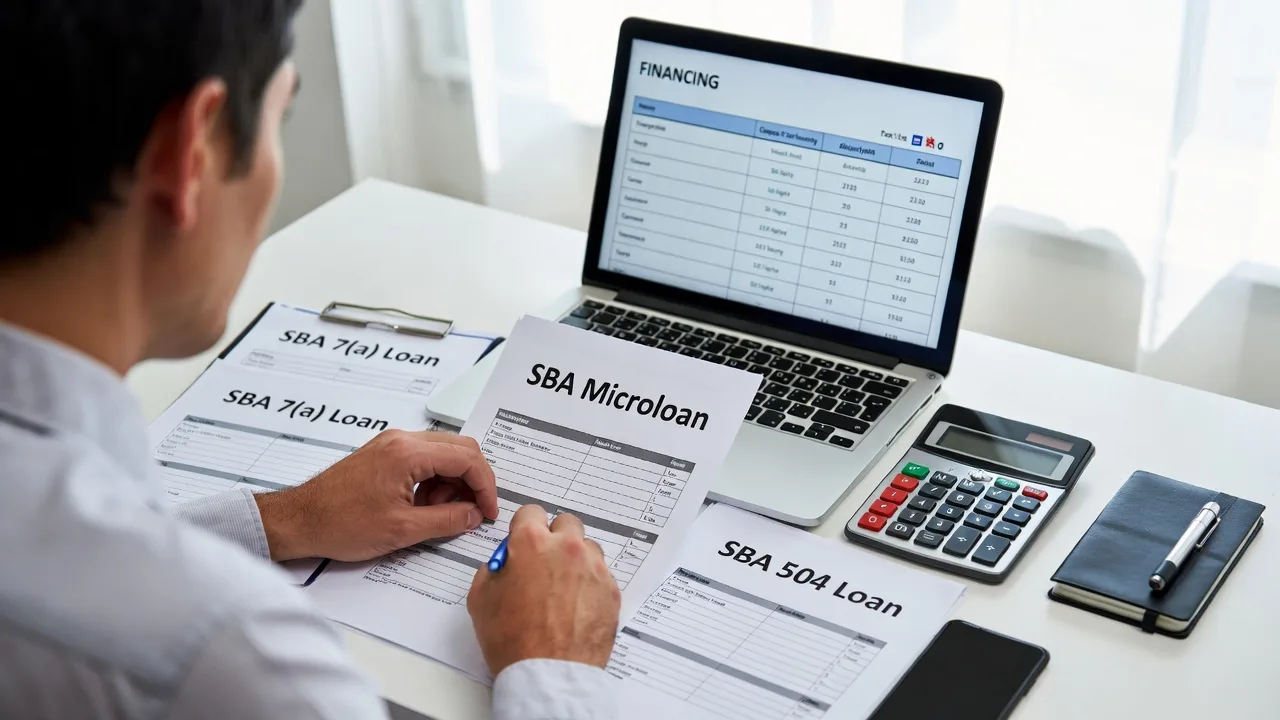
Three programs dominate startup lending. Everything else either requires operating history you don’t have or focuses on disaster recovery and specialized circumstances.
SBA 7(a) Loans
This is the workhorse program. Maximum loan amount reaches $5 million, though brand-new businesses rarely qualify for more than $350,000 unless they’re purchasing commercial real estate or an existing company.
You can spend the money on almost anything legitimate: commercial kitchen equipment, initial inventory, franchise fees, working capital to cover six months of expenses, renovations to your leased space. The flexibility makes it attractive compared to equipment-only loans or lines of credit with restrictive covenants.
Most participating lenders look for personal credit scores above 680. Some will dip to 650 if you’re putting down 25% instead of 10% or you’ve got 15 years managing businesses in your industry. Your personal financial statement matters enormously—banks want to see you can survive personally while your business ramps up.
Working capital loans run up to 10 years for payback. Equipment financing can stretch to 10 years. Real estate loans extend to 25 years. These longer terms keep monthly payments manageable during your startup phase when cash flow remains unpredictable.
Current interest rates for newer businesses typically land between 11-13.5%, though your specific rate depends on prime rate fluctuations, loan amount, and term length. Smaller loans under $100,000 usually carry higher rates than $250,000 loans because processing costs represent a bigger percentage.
SBA Microloans
The ceiling sits at $50,000, with average loans around $13,000. These work particularly well for home-based consultancies, mobile services, or businesses that need modest capital to get started.
Here’s the quirk: you can’t apply through regular banks. Microloans come from nonprofit community lenders in your area—organizations with names like “Small Business Development Corporation” or “Community Capital Fund.” Each sets their own credit requirements, but they’re generally more forgiving than commercial banks.
Some microlenders will work with credit scores in the 600-640 range if your business plan impresses them and you’ve completed their entrepreneurship training course. Many provide free mentoring alongside capital, which matters more than money for some new owners.
You’ll pay 8-13% interest and must repay within six years maximum. Application-to-funding often takes 4-6 weeks rather than the 3-4 months typical for larger 7(a) loans.
SBA CDC/504 Loans
This program finances real estate purchases and major equipment—stuff that’ll last 10+ years. The structure splits into thirds: your bank provides 50% of the project cost, a Certified Development Company (CDC) kicks in 40% backed by the SBA, and you contribute 10% down.
Most startups can’t qualify because the program requires you to create or retain jobs as your business grows. If you’re buying a building for your new brewery or purchasing the commercial space where you’ll run your martial arts studio, 504 loans offer excellent terms. Otherwise, focus elsewhere.
SBA Loan Requirements for New Business Owners
Lenders compensate for your lack of business history by scrutinizing your personal financial situation intensely. Expect them to examine every detail of your credit report and balance sheet.
Personal Financial Requirements
Your personal credit score functions as your business credit score until you build a company track record. Most 7(a) lenders draw a hard line at 680. Fall below that, and you’re probably looking at rejection letters unless you’ve got unusual strengths elsewhere—maybe you’re investing 40% down, or you’ve successfully exited two previous businesses.

Between 650-679, you enter gray zone territory. Some lenders will approve you. Most won’t. Microlenders become your better bet in this range.
Below 650? Fix your credit before applying. You’re wasting time and creating unnecessary credit inquiries.
Lenders pull your full credit report and examine it forensically. That charge-off from 2019 you forgot about? They’ll ask about it. The medical collection for $347? You’ll need to explain what happened. Recent late payments on your car loan suggest you might struggle with business debt too.
Bankruptcies create substantial obstacles but don’t automatically disqualify you. Chapter 7 needs to be discharged at least two years ago, preferably three or more. Chapter 13 requires you’ve been making payments on time for at least a year, ideally longer.
Your debt-to-income ratio gets calculated based on all your existing obligations (mortgage, car payments, student loans, credit cards) plus your new business loan payment. Lenders want to see you won’t be financially crushed if your business takes longer to generate income than projected. If you’re already stretched thin, you might need a spouse or partner to co-sign.
For loans exceeding $25,000, the SBA mandates that lenders secure all available collateral. Translation: you’ll pledge your house, investment accounts, vehicles, or other valuable property. Below $25,000, collateral requirements lighten considerably, making smaller loans more accessible.
Business Eligibility Criteria
The SBA sets size standards by industry—some measured by employee count, others by annual revenue. Unless you’re launching something extremely capital-intensive, you’ll easily qualify as “small.” Check the size standards table on SBA.gov if you’re concerned.
You must operate as a for-profit company inside the United States or its territories. Nonprofits can’t participate. Passive real estate investment companies don’t qualify. Businesses engaged in speculation or lending are excluded.
The personal investment requirement catches many applicants off guard. The SBA expects you’ll contribute 10-20% of total project costs from your own resources—savings, home equity, retirement accounts (with penalties), or seller financing if you’re acquiring an existing company. You cannot fulfill this requirement with borrowed money from credit cards or other loans.
Your business plan becomes your financial statement substitute. This isn’t a five-page document with generic market research. Lenders want 25-40 pages demonstrating you’ve researched your competitors, identified your specific target customers, calculated realistic startup costs, and projected revenues based on verifiable assumptions rather than wishful thinking.
Industry experience weighs heavily in approval decisions. Spent a decade as a sous chef and now opening your own restaurant? That strengthens everything. Worked in accounting your whole career and suddenly launching a landscaping company? Expect difficult questions about why you think you can succeed in an unfamiliar field.
How to Apply for an SBA Loan as a New Business
This sba loan for new business process moves at glacial speed compared to getting approved for a credit card or even a car loan. Budget 60-120 days from your first lender conversation to receiving funds. Sometimes longer if complications emerge.
Step 1: Prepare Your Documentation
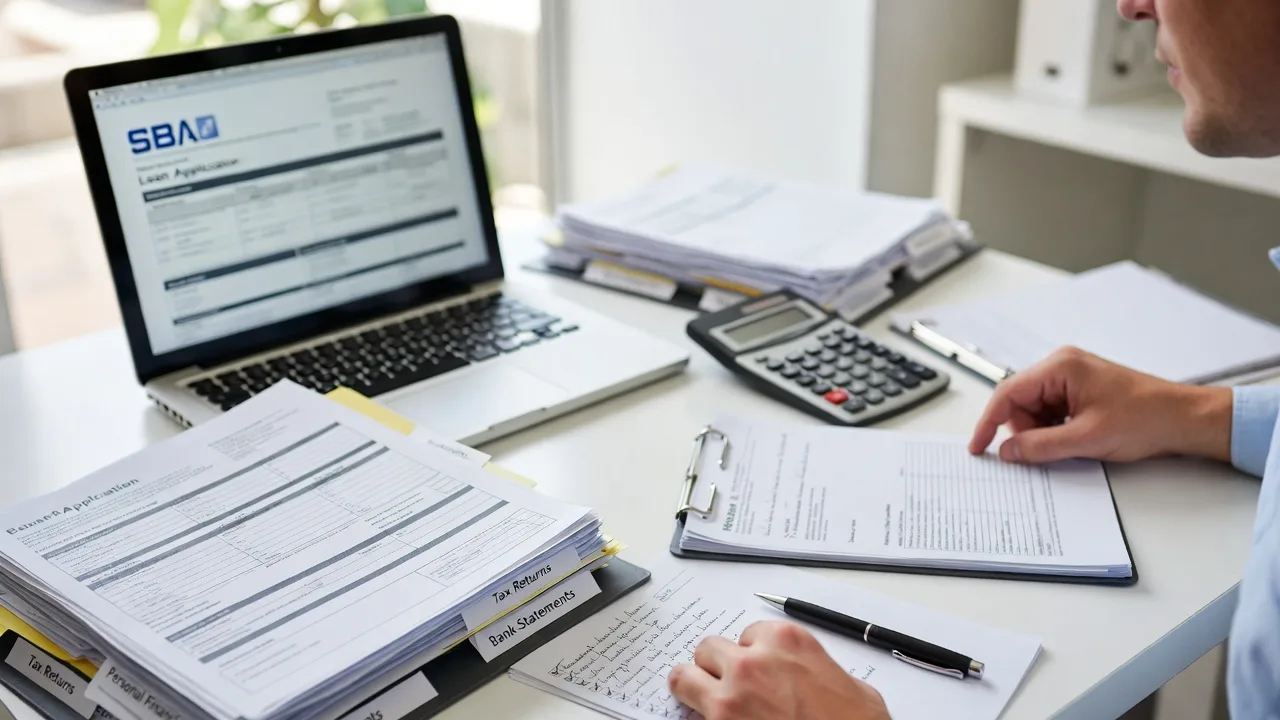
Gather documents before contacting any lenders. You’ll need three years of personal tax returns, a current personal financial statement listing all your assets and liabilities, your resume emphasizing relevant business experience, and a comprehensive business plan including three-year financial projections.
If you’ve already formed your LLC or corporation, include articles of organization, business licenses, commercial leases, and any contracts you’ve signed with suppliers or customers. Buying an existing business? Add the purchase agreement and the seller’s last three years of tax returns and financial statements.
Step 2: Find an SBA-Approved Lender
Every bank doesn’t participate in SBA programs. The SBA maintains a lender directory on their website, but asking for referrals often works better. Talk to your accountant, business attorney, or other entrepreneurs about who they’ve worked with successfully.
Some lenders specialize in startups while others strongly prefer established businesses with track records. Don’t waste time—ask directly during your first call: “How many SBA loans for brand-new businesses with no operating history did you close in the past 12 months?” Zero or one? Move on to the next lender.
Community banks and credit unions often provide superior service compared to massive national banks for SBA deals. They’re more inclined to consider your complete story rather than just running automated underwriting algorithms.
Step 3: Submit Your Application
Your lender will hand you their proprietary application forms plus SBA Form 1919 (the standard borrower information document). You’ll answer detailed questions about your personal finances, your business concept, exactly how you’ll spend the loan proceeds, and what gives you confidence you’ll succeed.
Thoroughness and honesty matter more than polished language. Inconsistencies between your application and supporting documents trigger automatic red flags. Had a business fail in 2018? Address it head-on and explain what you learned rather than hoping they won’t notice.
Step 4: Underwriting and Approval
Your lender reviews everything first. If they’re satisfied, they package your deal and submit it to the SBA for guarantee approval. The SBA doesn’t re-examine every detail but does verify you meet their program requirements.
Expect follow-up questions during this phase. Underwriters routinely request clarification about your revenue projections, additional documentation about your industry experience, or explanations about items on your credit report. Respond within 24-48 hours. Most delays trace back to borrowers who take two weeks to answer simple questions.
Step 5: Closing and Funding
Once approved, you’ll attend a closing appointment to sign loan documents—similar to a mortgage closing but usually faster. Bring your down payment via cashier’s check or arrange a wire transfer in advance.
Many lenders disburse startup loan funds in stages rather than handing you the full amount immediately. You might receive half at closing, with the remainder released as you submit receipts for equipment purchases or hit specific milestones. This protects everyone from fund misuse.
Costs and Terms You Can Expect
SBA loans carry expenses beyond interest charges. Understanding total costs helps you budget accurately and evaluate whether offers from different lenders actually differ meaningfully.
Interest rates in 2026 for startup SBA loans generally fall between 11-13.5%, varying based on loan size, term length, and your personal creditworthiness. Rates typically combine the current prime rate (which fluctuates) plus a lender-specific markup ranging from 2.25% to 4.75%. Smaller loans and shorter repayment periods usually carry higher markups.
The SBA assesses a guarantee fee calculated from the guaranteed portion of your loan. Loans up to $500,000 typically incur fees of 2-3%. Between $500,000-$1 million, expect 3-3.5%. Your lender often rolls this cost into your loan balance so you don’t pay it upfront, though you’ll pay interest on it.
Individual lenders may tack on packaging fees, origination charges, or processing costs ranging from $500-$2,500. These vary dramatically between institutions. Some waive them to win your business, so always ask about all fees during initial conversations.

Here’s how different SBA programs compare when you’re starting from scratch:
| Program | Loan Maximum | Common Uses | How Long to Repay | Down Payment Expected | Ideal Candidate |
|---|---|---|---|---|---|
| 7(a) | $5 million | Working capital, equipment purchases, inventory, commercial real estate | 10 years for working capital/equipment; up to 25 years for property | 10-20% of project cost | Most startups requiring substantial capital |
| Microloan | $50,000 | Small equipment, initial inventory, modest working capital | 6 years maximum | Varies by lender, sometimes none | Home-based businesses, service companies, very small capital needs |
| 504 | $5.5 million | Commercial property purchase, heavy equipment | 10, 20, or 25 years depending on asset | 10% of total project | Manufacturing operations, restaurants buying buildings, retail purchasing commercial space |
Real numbers help illustrate this better. Imagine a coffee shop owner borrows $150,000 via a 7(a) loan at 12% for 10 years. Monthly payments run approximately $2,150. Add a 15% down payment of $26,470, bringing total project cost to $176,470. The SBA guarantee fee (roughly $3,800) gets rolled into the loan balance.
Compare that to a freelance web designer taking a $15,000 microloan at 10% over five years. Monthly payments: about $318. Total interest paid: around $4,100. The shorter term and smaller amount mean dramatically less interest expense compared to the coffee shop scenario.
Common Mistakes New Business Owners Make When Applying
Most SBA loan rejections stem from avoidable mistakes. Learning where others fail helps you sidestep the same problems.

Underestimating Personal Financial Requirements
Entrepreneurs frequently assume their brilliant business concept will overcome mediocre credit or excessive personal debt. It won’t. Before pursuing any sba loan for new business, spend six months raising your credit score above 680 and paying down high-interest debts. The gap between a 650 score and a 700 score often determines approval versus rejection.
Submitting Weak Financial Projections
Wildly optimistic projections kill more applications than conservative ones. Show your restaurant generating $800,000 in year-one revenue with no detailed explanation of how you’ll attract customers, and underwriters will dismiss your entire plan as fantasy.
Base projections on industry benchmarks and concrete marketing tactics. Claiming 10% local market share in year one? Demonstrate exactly how: 250 customers monthly averaging $65 per transaction, driven by $2,500 monthly ad spend across Google Ads, Instagram, and local partnerships. Specificity signals credibility.
Choosing the Wrong Loan Type
Some applicants pursue 7(a) loans requiring 90 days of processing when a microloan would fund them in 30 days. Others settle for $40,000 microloans when they truly need $90,000, forcing them to seek additional financing within months and creating messy overlapping obligations.
Match loan type to actual requirements, not perceived ease. That $40,000 microloan might feel less intimidating, but if you genuinely need $75,000, you’re setting yourself up for trouble.
Inadequate Industry Knowledge
Launching a business in an unfamiliar industry demands extraordinary evidence you’ve prepared. Lenders want proof you’ve hired experienced managers, consulted with industry veterans, or completed relevant training programs.
One approach that works: recruit someone with deep industry experience as an advisor or partner, even informally. A restaurant owner with 20 years of experience who agrees to mentor you monthly and review your operations plan substantially strengthens your application.
Poor Documentation Organization
Submitting incomplete or chaotic documents frustrates underwriters and drags out your timeline. Build a checklist of every required document and organize everything into clearly labeled folders (digital or physical).
When underwriters request additional information, provide it immediately—within 48 hours if possible. Applications stretching across five months often die from lost momentum rather than fundamental disqualification.
Ignoring the Lender Relationship
Some applicants treat this as a purely transactional process—submit documents, wait for the decision. Better outcomes come from relationship building.
Schedule an in-person meeting before formally applying. Explain your background, walk through your concept, and articulate why you’re confident about success. When your loan officer genuinely believes in you, they’ll advocate for your file internally and help you navigate obstacles that emerge during underwriting.
Too many entrepreneurs underestimate the importance of preparation when seeking SBA financing. The businesses that succeed are those where the owner has spent months—sometimes years—building credit, saving for a down payment, and developing a realistic plan. The loan itself is just the beginning.
Michael Chen, Senior Loan Officer, Pacific Community Bank
FAQs
Yes—that’s precisely why these programs exist. Lenders evaluate your personal credit history, relevant work experience, business plan quality, and personal investment level instead of business financial statements. However, you must demonstrate applicable skills and a viable concept. Someone with zero entrepreneurial experience entering a completely unfamiliar industry faces nearly impossible odds.
Expect 60-120 days from application submission to receiving funds. Timeline varies based on documentation completeness, lender workload, and whether the SBA requires additional information. Some lenders offer accelerated processing for loans under $350,000, potentially shortening timelines to 30-45 days. Complicated situations—previous bankruptcies, unusual business structures, environmental reviews—always take longer.
Most 7(a) lenders prefer 680 minimum, though some consider scores as low as 650 when offset by strong factors like extensive industry experience or large personal investment. Microloan programs show more flexibility, with some accepting scores between 600-640. Below 600, approval becomes extremely unlikely regardless of other strengths. Borderline scores? Wait and improve them before applying.
Absolutely—this represents one of the strongest sba loan for new business example scenarios. Lenders prefer acquiring existing businesses over pure startups because proven track records exist. You’ll need the seller’s three years of tax returns and financial statements, a signed purchase agreement, and a clear explanation of how you’ll maintain or improve performance. The SBA permits seller financing to count toward required down payments, helping many buyers structure favorable deals.
Moving Forward with Your SBA Loan Application
Getting SBA financing for your startup demands patience, meticulous preparation, and realistic expectations. This process takes months, not weeks, and requires more documentation than most entrepreneurs anticipate.
Begin with honest self-assessment. Does your credit need work? Have you saved enough for a meaningful down payment? If not, spend the next six months strengthening your position rather than rushing into a premature application.
Select the loan type matching your actual needs. Microloans handle modest capital requirements and faster timelines well. The 7(a) program addresses most other situations. Don’t chase 504 loans unless you’re specifically purchasing real estate or major equipment.
Invest serious effort in your business plan. This document does more than satisfy lender checkbox requirements—it forces you to think through your business model, spot potential problems, and develop realistic strategies. Many entrepreneurs discover fatal concept flaws during business plan development, saving themselves from expensive failures later.
Cultivate relationships with lenders before you desperately need money. Attend small business networking events, join your local chamber, and introduce yourself to SBA lenders in your area. When application time arrives, you’ll already have advocates familiar with you and your concept.
Remember that the SBA loan functions as a tool, not a success guarantee. Capital provides runway to build your business, but execution determines outcomes. Plenty of well-funded startups fail while bootstrapped competitors thrive. Use borrowed money wisely, monitor your numbers obsessively, and adjust strategies based on real-world results rather than initial projections.
Entrepreneurs who succeed with SBA loans treat them as partnerships. They communicate regularly with lenders, provide updated financial statements proactively, and request advice when challenges surface. Your lender genuinely wants you to succeed—your success means they get repaid and can fund more businesses.
Attack the application process systematically. Gather documents, strengthen credit, develop your plan, find the right lender, and submit a complete package. Each step builds toward your goal of launching a properly capitalized business with genuine survival odds.