

- What Is Equipment Financing?
- How Equipment Financing Works
- Equipment Financing Requirements
- Types of Equipment Financing Options
- Advantages and Disadvantages of Equipment Financing
- How to Qualify for Equipment Financing
- What a Finance Expert Says About Equipment Financing
- Comparing Your Equipment Financing Options
Your medical practice needs a $250,000 MRI machine. Your landscaping crew is turning down jobs because you lack a second excavator. That Italian pizza oven would let you double dinner capacity—if you had $85,000 sitting around.
Most businesses don’t keep that kind of cash idle. Equipment financing lets you acquire what you need now and pay over time, using the equipment’s own revenue generation to cover the payments.
Here’s everything you need to know: how it actually works, what lenders look at, whether your business qualifies, and if the interest cost makes sense for your situation.
What Is Equipment Financing?
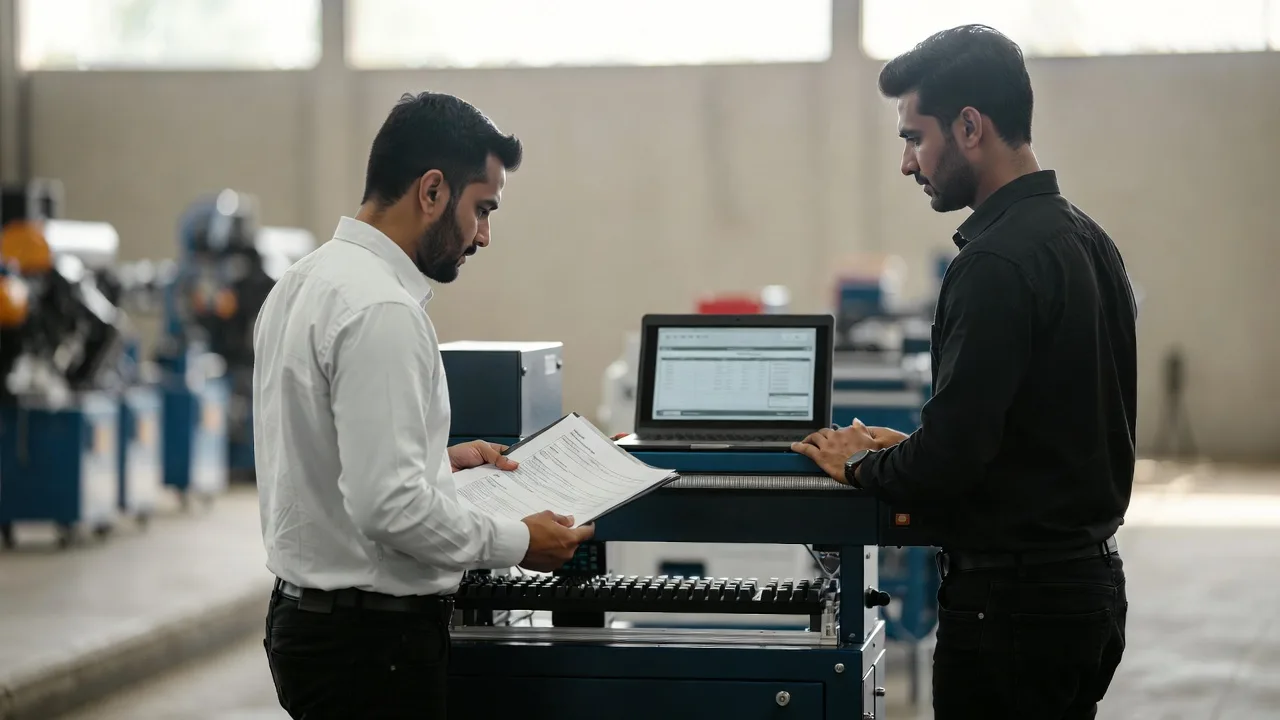
Think of equipment financing as a loan where the equipment you’re buying acts as its own collateral. You borrow money to purchase machinery, vehicles, technology, or other hard assets your business needs. The lender takes a security interest in that equipment until you’ve paid everything back.
The collateral arrangement changes the math for lenders. They’ll often approve borrowers they’d turn down for unsecured credit, and interest rates typically run lower because the lender can recover their money by repossessing and selling the equipment if things go sideways.
Here’s where people get confused: equipment financing and equipment leasing aren’t the same thing. With financing, you’re buying the asset—it’s yours from day one, sitting on your books as property you own (with a loan against it). Leasing means you’re essentially renting: someone else owns it, you make payments to use it, and at the end of the lease term you either give it back, buy it out, or start a new lease on different equipment.
Businesses finance all sorts of hard assets:
- Construction gear like excavators, bulldozers, boom lifts, and concrete mixers
- Medical equipment including MRI scanners, ultrasound machines, dental chairs, and surgical tools
- Trucks and vehicles—everything from delivery vans to tractor-trailers to specialized service vehicles
- Manufacturing machinery like CNC mills, injection molding machines, and industrial presses
- Restaurant buildouts including walk-in coolers, commercial ranges, and dishwashing systems
- Tech infrastructure such as server farms, telecommunications equipment, and production printing systems
What makes equipment financing different from regular business loans? The lender isn’t just looking at your financials. They’re also evaluating the equipment: What’s it worth new? How well does it hold value? If they have to take it back and sell it, what will they recover? A Ford F-250 has a liquid resale market. That custom robotics system you’re designing? Much harder to evaluate and finance.
How Equipment Financing Works
The process has more moving parts than a basic loan because two things need approval: you and the equipment.
Step 1: You submit an application
You’ll provide standard business information—legal entity name, EIN, how long you’ve been operating, rough annual revenue. Then comes equipment details: exactly what you’re buying, from whom, how much it costs, new versus used. Most lenders want to see the actual vendor quote or invoice, not just your estimate.
Expect to hand over two years of business tax returns (all schedules, not just the 1040 summary), three to six months of bank statements, and a personal financial statement. If you own 20% or more of the business, you’re signing a personal guarantee, so the lender wants to see your personal balance sheet too.
Step 2: Credit review and financial analysis
Lenders pull credit—both business and personal. They’re looking at your track record of paying debts and how much credit you’re already carrying. Then comes cash flow analysis. Can your business realistically handle the new monthly payment on top of existing expenses? They’ll look at revenue consistency, not just totals. A business doing $500K annually with wild swings month-to-month looks riskier than one doing $400K with steady income.
Step 3: Equipment valuation
The underwriting team evaluates whether the equipment justifies the loan amount. Standard equipment with established markets—trucks, tractors, standard manufacturing equipment—gets approved easily. Specialized machinery with limited buyers? That’s when lenders get cautious and might require bigger down payments. Equipment age matters too. Nobody’s financing a 15-year-old machine with questionable remaining life.
Step 4: Approval and paperwork
Once approved, you’ll receive a commitment letter spelling out everything: loan amount, interest rate, payment amount and frequency, term length, any origination fees. After you sign, the lender typically pays the vendor directly to ensure funds go toward the equipment. They’ll also file a UCC-1 financing statement—a public record showing they have a security interest in your equipment.
Step 5: Repayment kicks in
First payment usually hits 30 to 45 days after funding. You’ll make fixed monthly payments (occasionally quarterly for seasonal businesses) until the loan is satisfied. The equipment stays in your possession the whole time—you’re using it, maintaining it, and keeping it insured per the loan agreement.
Most equipment loans run three to seven years. The term usually matches the equipment’s useful life. Banks don’t want you making payments on a machine that’s already worn out, and you don’t want to be either. Rates vary wildly—anywhere from 6% to 25% depending on your credit, the equipment type, and the lender. Strong credit and good financials can get you into the high single digits.
Equipment Financing Example with Real Numbers
Let’s say you run a landscaping business and you need a skid steer loader. You find the right machine for $75,000. After shopping lenders, you get approved with these terms:
- Equipment purchase price: $75,000
- Your down payment: $7,500 (that’s 10%)
- Amount financed: $67,500
- Interest rate: 8.5% annual percentage rate
- Loan term: 60 months (5 years)
- Monthly payment: $1,385
Run the math over five years: 60 payments of $1,385 equals $83,100 in total payments. Subtract the $67,500 you borrowed, and you’ve paid $15,600 in interest. Add back your down payment, and your all-in cost for this skid steer is $90,600 versus the $75,000 sticker price.
Now consider the alternative. Paying cash means writing a check for $75,000 today—money that’s no longer available for payroll, fuel, emergency repairs, or taking advantage of a big job that pops up. By financing, you keep $67,500 working in your business. If this skid steer lets you take jobs that bring in an extra $3,000 monthly, it’s more than covering its own payment while your cash stays liquid.
Equipment Financing Requirements
Lenders don’t have identical standards, but certain benchmarks show up consistently. Here’s what you’re up against.
Credit score expectations
Personal credit matters more than business credit for most equipment loans, especially if your company is relatively young. Traditional lenders—banks and credit unions—generally want personal scores of 650 minimum. Hit 700 or above and you’ll qualify for their best pricing. Drop below 600 and you’re looking at alternative lenders who’ll charge 18% to 25% or require you to put down 25% or more. Business credit scores from Dun & Bradstreet or Experian matter more once you’ve been around a few years and have trade credit history, but early on it’s really about personal credit.
Time in business
Two years of operating history opens most doors. Some lenders will work with you at six months if your personal credit is strong and you’ve got deep industry experience—like if you’re a veteran restaurant manager opening your first place. Startups often need to compensate for lack of history with bigger down payments, sometimes 20% to 30%. The logic: you haven’t proven you can generate consistent revenue yet, so put more skin in the game.
Revenue thresholds
Lenders want your revenue to dwarf the loan amount. A rough rule of thumb: annual revenue should be at least 4x the financed amount. Borrowing $50,000? They want to see $200,000+ in annual revenue. Looking for $500,000? Better be doing $2 million or more. They’ll calculate debt service coverage ratio—basically, does your cash flow cover debt payments by enough margin? Most want to see 1.25x to 1.5x coverage.
Down payment needs
Plan on 10% to 20% down for standard equipment. That percentage climbs for specialized machinery, older used equipment, or if your credit is marginal. Some lenders advertise “100% financing” for borrowers with exceptional credit (750+) and strong business metrics, but don’t count on it as the norm.
Documentation required
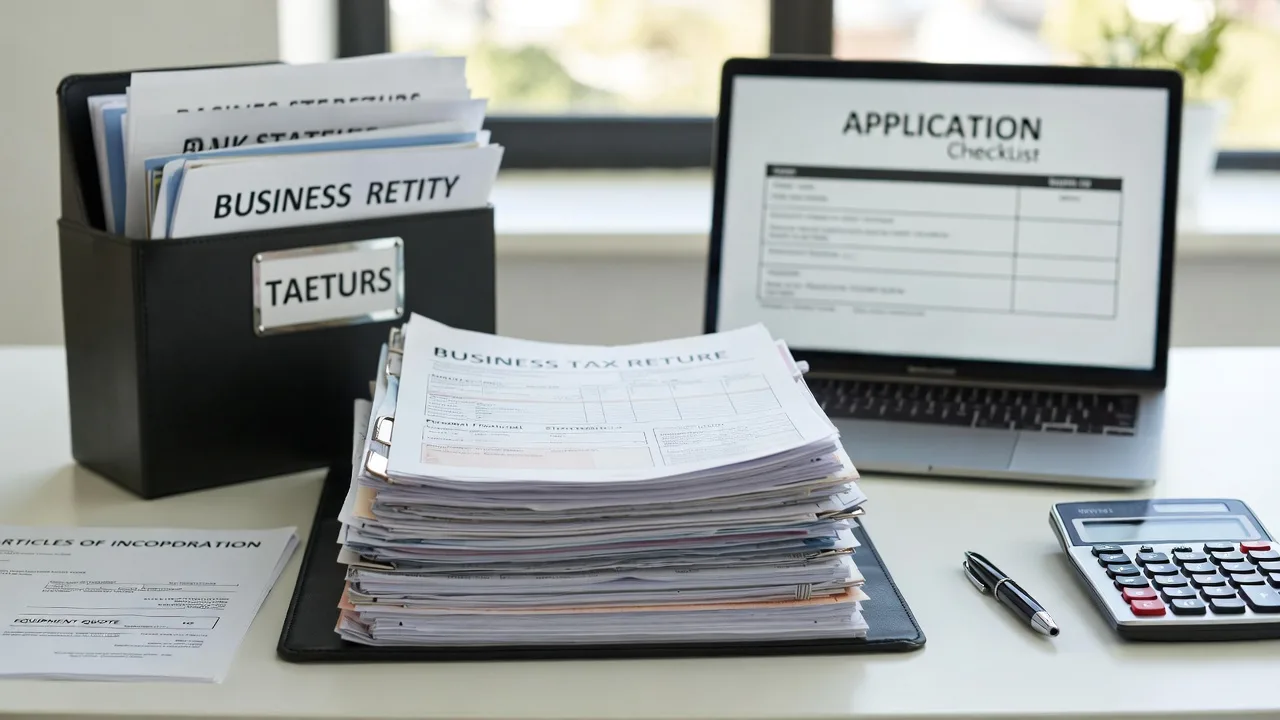
Here’s the paperwork pile:
- Last two years of complete business tax returns—every schedule, not just the main form
- Three to six months of business bank statements (some lenders want daily balances)
- Personal financial statement listing all assets and liabilities for each owner
- Copy of the equipment quote, proposal, or purchase agreement from the vendor
- Government-issued ID for all owners
- Articles of incorporation, operating agreement, or partnership agreement
- For larger loans, aged receivables report and current balance sheet
Missing documents slow everything down. Before you even apply, get this stuff organized in a folder.
Types of Equipment Financing Options
The equipment financing umbrella covers several distinct products. Each serves different purposes.
Equipment loans
Standard term loans secured by the equipment. You borrow a lump sum, take ownership immediately, make fixed monthly payments, and owe nothing once you’ve made the final payment. The equipment goes on your books as an asset you own (with corresponding debt on the liability side). Best choice when you intend to use equipment for its entire useful life and want full ownership.
Equipment leases
The lessor owns the equipment—you’re paying to use it. Monthly payments are typically lower than loan payments because you’re not financing the full purchase price, just the depreciation during your use period. At lease end you have options: return it and walk away, purchase it for fair market value (whatever it’s worth at that point), or upgrade to newer equipment with a fresh lease. Keeps equipment off your balance sheet if structured as an operating lease. Best for technology that becomes obsolete quickly, or when you prefer upgrading to newer models every few years rather than owning aging equipment.
Equipment Finance Agreements (EFAs)
Hybrid structure that looks like a lease but functions like a loan. You make payments similar to a lease, but ownership automatically transfers to you at the end—often for a token $1 purchase price. Structured this way to provide lease-like flexibility while ensuring you end up owning the asset. Best when you want lower payments that spread costs more evenly but definitely want to own the equipment eventually.
SBA 7(a) and 504 loans
The Small Business Administration guarantees portions of loans made by approved lenders, reducing their risk and allowing them to offer better terms. SBA 7(a) loans go up to $5 million and can cover equipment as part of broader working capital needs. Terms can stretch to 10 years for equipment. SBA 504 loans specifically target fixed assets and real estate, offering up to $5.5 million with 10- to 25-year terms. The catch? Extensive paperwork and 6 to 10 weeks for approval. Best for large equipment purchases, especially when combined with other capital needs like building renovations or working capital.
Vendor financing
Manufacturers and dealers often have captive finance arms. Caterpillar Financial. John Deere Financial. Dell Financial Services. They know exactly what the equipment is worth and have direct interest in moving inventory. Sometimes they run promotions—0% for 12 months or reduced rates during specific periods. Approval can be faster because they’re not getting third-party appraisals. Best when buying from major brands with established financing programs, especially during promotional periods.
Sale-leaseback arrangements
You sell equipment you already own outright to a lender, then immediately lease it back for continued use. Unlocks cash tied up in assets without losing access to them. Creates liquidity without taking on traditional debt (though you now have lease obligations). Best for businesses that need cash immediately and own valuable equipment but can’t afford to stop using it.
Advantages and Disadvantages of Equipment Financing
Every financing decision involves trade-offs. Understanding both sides helps you make the right call for your situation.
Advantages:
Keeps cash in your business
Writing a check for $100,000 depletes reserves you might need next month. Inventory costs spike. A key employee quits and you need to recruit. Your biggest customer pays 60 days late. Financing equipment spreads the cost across 36 to 84 monthly payments while keeping cash available for these scenarios. Many business owners find this liquidity more valuable than avoiding interest costs.
Improves your credit profile
Equipment financing adds a positive trade line to your business credit reports when you pay on time. This history strengthens your profile for future financing needs—lines of credit, real estate purchases, or larger equipment acquisitions. The impact compounds over time as you build a track record of handling debt responsibly.
Delivers immediate tax advantages
Section 179 deduction lets you write off up to $1,160,000 of qualifying equipment costs in the year you place it in service (2026 limit). Bonus depreciation provides additional first-year deductions on top of that. These deductions apply to the full purchase price even when you’re financing—you don’t have to pay cash to claim the deduction. Your CPA can model your specific situation, but equipment purchases often create substantial tax benefits.
Easier approval than unsecured loans
The equipment serves as collateral, reducing lender risk dramatically. They can recover funds by selling the equipment if you default. This security means higher approval rates, better interest rates, and larger loan amounts compared to unsecured loans for borrowers with similar credit. A business owner with a 660 credit score might get declined for a $50,000 unsecured loan but approved for $150,000 in equipment financing.
Aligns costs with benefits
Paying for equipment over five years while it generates revenue for five years makes economic sense. You’re not sacrificing today’s cash flow to pay for tomorrow’s benefits. The asset pays for itself while you use it.
Disadvantages:
Increases total cost
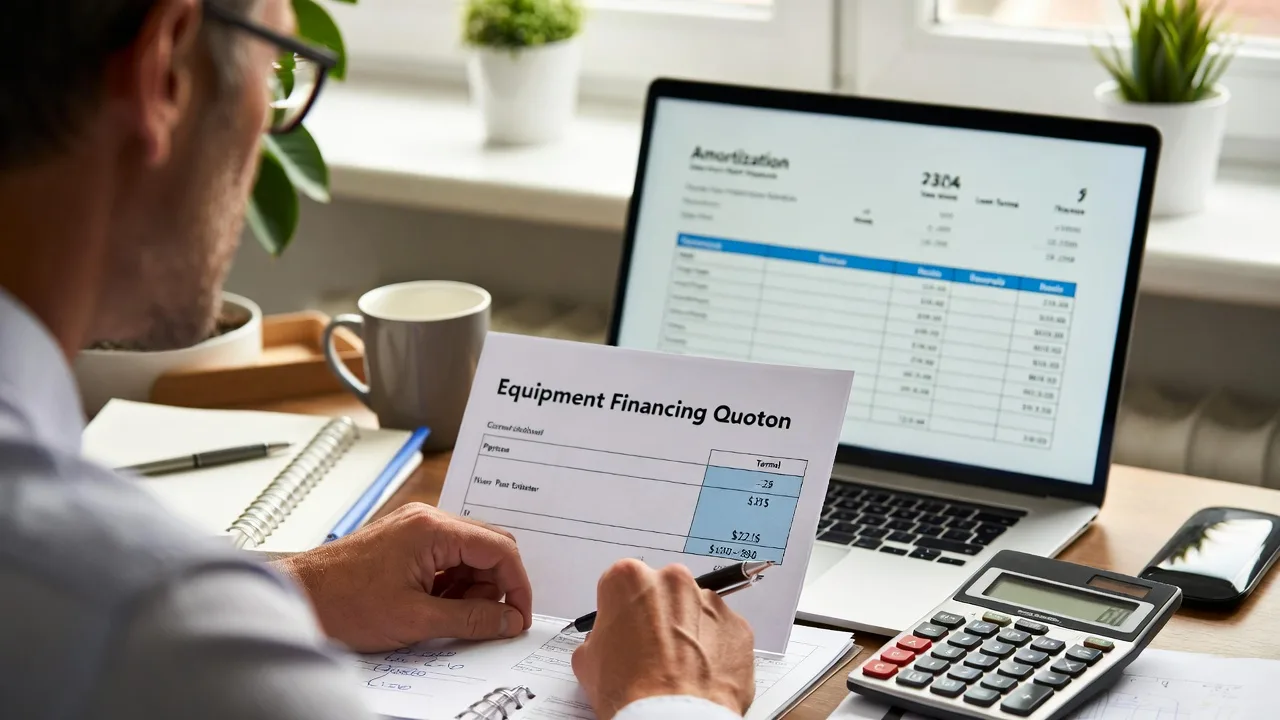
Interest isn’t free. A $100,000 equipment loan at 9% over five years costs roughly $24,000 in interest charges. You’re paying $124,000 for a $100,000 asset. Whether that premium makes sense depends on your alternative uses for capital and what the equipment generates in return.
Puts critical assets at risk
Default means the lender repossesses the equipment. Unlike defaulting on unsecured debt—where consequences are financial and legal but operational—losing financed equipment can shut down your operations immediately. If you financed your only delivery truck and it gets repossessed, you can’t deliver products. The operational risk is real.
Not everyone qualifies
Marginal credit, limited operating history, or unstable cash flow can disqualify you. Highly specialized equipment with limited resale markets might not qualify even if you do. And some industries—those considered high-risk or volatile—face greater scrutiny and higher rates regardless of individual business performance.
Potential obsolescence risk
Technology evolves. Regulations change. Better equipment hits the market. If you’re three years into a five-year loan on equipment that’s already obsolete or broken, you’re still making payments on something that no longer serves your business. This risk hits technology and software harder than construction equipment or vehicles.
How to Qualify for Equipment Financing
Preparation matters. These steps improve your approval odds and the terms you’ll receive.
Clean up your credit first
Pull your credit reports—personal and business—before applying. Dispute any errors, which are surprisingly common. Pay down credit card balances to improve utilization ratios. If your score sits at 630 and you can wait three months while paying down debt and correcting errors, you might hit 670—enough to move from subprime to near-prime pricing. That difference could save $15,000 on a large equipment loan.
Get documentation organized early
Complete, organized paperwork signals competence and speeds approval. Create a folder with tax returns, bank statements, financial statements, and business formation documents. Inconsistencies between different documents raise red flags—if your tax return shows $400K revenue but bank statements show $600K in deposits, be ready to explain why (maybe you run multiple entities or have non-operating income).
Pick equipment with resale value
Lenders prefer equipment they can easily sell if things go wrong. Standard models from major manufacturers? Easy to finance. Custom-built specialty equipment with limited buyers? Harder to finance and you’ll pay more. If you’re choosing between two pieces of equipment that both meet your needs, the one with better resale value will be cheaper to finance.
Show how equipment impacts revenue
For larger purchases, explain the business case clearly. How will you use this equipment? What new capabilities does it provide? What revenue opportunities does it unlock? Simple projections help: “Our current capacity is 50 units daily. This machine increases capacity to 85 units. Based on current order backlog, we expect to add $120K in annual revenue.” Lenders want confidence the equipment will generate enough cash flow to cover its own payments.
Compare lenders systematically
Banks offer the lowest rates but have the strictest requirements and slowest approval. Credit unions provide middle-ground rates with more flexibility. Online lenders approve quickly but charge premium rates. Captive finance companies (John Deere Financial, etc.) know their equipment cold but only finance their own products. Get quotes from at least three different lender types before deciding.
Time your application strategically
Apply when your business shows strong recent momentum—not right after your worst quarter in two years. Seasonal businesses should apply during peak season when revenue looks strongest, not during the off-season slump. Some lenders get more flexible at quarter-end or year-end when they’re trying to hit loan volume targets.
Negotiate beyond the rate
Interest rate matters, but so do other terms. Can you negotiate the down payment from 20% to 15%? Can you get monthly payments instead of weekly? Will they waive the origination fee? Can you include soft costs (installation, training, delivery) in the loan amount? Some lenders offer seasonal payment schedules that align with your cash flow—higher payments during peak months, lower during slow periods.
What a Finance Expert Says About Equipment Financing
Business owners fixate on whether they have the cash available, not whether using that cash is the smartest move. Paying cash drains liquidity you might desperately need next quarter. I’ve watched businesses turn down growth opportunities because they’d spent their reserves on equipment three months earlier. That interest you’re avoiding? It’s often cheaper than the opportunities you’ll miss by being cash-poor. Smart operators view equipment financing as a liquidity tool, not a last resort when they’re broke.
Michael Brennan
Comparing Your Equipment Financing Options
| Feature | Equipment Loan | Equipment Lease | SBA 7(a) Loan |
|---|---|---|---|
| Interest rates you’ll see | 6% to 18% APR | 8% to 25% effective annual cost | 5.5% to 10% APR over prime |
| How long you’re paying | Usually 3 to 7 years | Commonly 2 to 5 years | Equipment portion: up to 10 years |
| Money due upfront | Typically 10% to 20% of price | First payment, last payment, or 10% security deposit | Usually 10% to 20% down |
| Who owns it | You own it from purchase | Lessor owns it; you might buy at end | You own it from purchase |
| Tax implications | Depreciate asset; deduct interest | Deduct payments (if operating lease) | Depreciate asset; deduct interest |
| When it makes sense | Equipment you’ll use long-term and want to own outright | Technology you’ll upgrade or equipment you’ll replace regularly | Large purchases, especially combined with other capital needs |
FAQs
Most traditional lenders set their floor at 650 for the primary business owner’s personal credit. Score above 700 and you’ll access their best pricing tiers and terms. Between 600 and 649 you’ll still find approval, but expect higher rates (often 15% to 20%) and larger down payments (20% to 25%). Below 600, you’re limited to specialized lenders who work with challenged credit—rates can exceed 25% and you might need to put down 30% or more. Some aggressive online lenders claim they’ll approve 550+ scores, but read the fine print on rates and fees carefully.
Yes, though it’s tougher and more expensive. Most startups need exceptional personal credit—think 700 or higher—because lenders lean heavily on personal credit history when business credit doesn’t exist yet. Expect to put down 20% to 30% instead of the typical 10% to 15%. Your industry experience matters tremendously. A 25-year restaurant veteran opening their first restaurant gets more consideration than someone with no industry background. SBA microloans (up to $50,000) are often more accessible for startups than conventional equipment financing. Vendor financing programs sometimes have more flexible startup policies than banks.
The interest portion of each payment is deductible as an ordinary business expense. Beyond that, Section 179 lets you deduct up to $1,160,000 of qualifying equipment costs in the year you start using it (that’s the 2026 limit, which adjusts periodically). Bonus depreciation rules allow additional first-year write-offs. These deductions apply to the full purchase price whether you pay cash or finance. Your tax situation—entity type, profitability, other deductions—affects how valuable these benefits are. Run the numbers with your CPA before making decisions based on tax treatment alone.
The lender will send default notices after you miss payments—usually after 30 days late. You’ll have opportunity to cure the default by catching up on missed payments plus late fees. If you don’t cure it, the lender will repossess the equipment. They’re legally entitled to it since it’s collateral. They’ll sell it, usually through auction or dealer channels. Sale proceeds get applied to your remaining loan balance. Here’s the painful part: if the sale doesn’t cover what you owe, you’re still personally liable for the difference (called a deficiency balance) assuming you signed a personal guarantee. The default also hammers your credit—both business and personal—making future financing extremely difficult. If you see payment problems coming, call your lender immediately. Many will restructure terms, defer payments, or modify the agreement rather than go through repossession.
Online lenders and fintech platforms can render decisions within 24 to 48 hours if your documentation is complete, with funding hitting your account in three to five business days. Traditional banks move slower—figure one to three weeks from application to funding. Credit unions fall somewhere in between, usually one to two weeks. SBA loans take the longest due to government paperwork requirements: expect four to eight weeks minimum, sometimes longer. Approval speed depends heavily on you providing complete, accurate documentation upfront. Missing one bank statement or an incomplete tax return adds days or weeks to the timeline.
Used equipment financing absolutely exists, though terms differ from new equipment. Lenders typically cap used equipment age at 8 to 10 years and want significant remaining useful life—nobody finances a truck with 200,000 miles that’s likely to die in two years. Rates run 1% to 3% higher than comparable new equipment financing because resale value is lower and equipment condition varies more. Down payments creep up to 15% to 25%. The equipment’s condition matters—lenders may require inspection reports or appraisals. Used equipment purchased from established dealers is easier to finance than private-party purchases where provenance and condition are harder to verify.
Equipment financing converts large capital outlays into predictable monthly expenses while keeping cash available for everything else your business needs to function and grow. The mechanics are straightforward: borrow against the equipment’s value, put it to work generating revenue, repay the loan over time.
Success comes from matching the right financing structure to your specific situation. Planning to own and operate equipment for its entire useful life? Traditional equipment loans make sense. Need to upgrade technology frequently? Leasing provides flexibility. Making major purchases alongside facility improvements or other capital needs? SBA programs might deliver better terms despite longer approval timelines.
Before you apply anywhere, clean up your credit reports, organize financial documentation into a complete package, and shop multiple lenders. The rate difference between lenders can exceed 5 percentage points on identical deals—that’s $30,000+ over five years on a $200,000 equipment purchase. Worth an afternoon of comparison shopping.
Most importantly, think about equipment financing as a strategic choice, not something you do only when you lack cash. The real question isn’t “can I afford to pay cash?” It’s “does keeping cash liquid create more value than avoiding interest charges?” For businesses with growth opportunities, reliable customers, and revenue-generating equipment, tying up capital in equipment often costs more than the interest you’re trying to avoid.