

- What Are SBA 7(a) Loans and How Do Rates Work?
- Current SBA 7(a) Loan Rates for 2026
- How SBA 7(a) Loan Rates Are Calculated
- Requirements That Affect Your SBA 7(a) Loan Rate
- The SBA 7(a) Loan Application Process and Rate Lock
- Real-World SBA 7(a) Loan Rate Examples
- How to Qualify for the Lowest SBA 7(a) Rates
You’re looking at SBA 7(a) financing because you’ve heard it’s one of the better deals out there for small business owners. You’re right—but the rate you actually get depends on factors most borrowers don’t understand until they’re deep into the application.
Here’s what matters: The government backs part of your loan, which lets banks offer better terms than they would on their own. But your final rate? That’s negotiated between you and your lender within boundaries the SBA sets. Right now, we’re seeing business owners pay anywhere from 9.75% to 12.25%, depending on how their application stacks up.
Let’s walk through exactly how these rates work, what you’ll face in 2026, and the moves that actually drop your interest cost.
What Are SBA 7(a) Loans and How Do Rates Work?
The 7(a) program offers up to $5 million for just about any legitimate business purpose—buying equipment, covering payroll during expansion, purchasing real estate, even acquiring another company. The SBA doesn’t hand you money. Instead, it promises your bank it’ll cover 75-85% of losses if you default. That safety net means banks take risks they’d normally avoid.
Here’s the catch with rates: The SBA doesn’t set them. Your lender does. They start with the Wall Street Journal’s prime rate—currently sitting at 7.50%—then add their own markup, called the spread. The SBA only steps in to cap how high that spread can go, preventing banks from charging 15% or 20% just because they can.
Why obsess over half a percentage point? Take a $250,000 loan over ten years. At 10%, you’re paying roughly $3,300 monthly. Bump that to 10.5%, and you’re at $3,400. That’s $1,200 extra every year, or $12,000 over the life of the loan. For a small business, that’s not pocket change—it’s a new hire or a major equipment purchase.
Unlike subsidized government programs with locked-in rates, 7(a) loans move with the market. When the Federal Reserve adjusts rates to fight inflation or juice the economy, you’ll feel it in your monthly payment if you’ve got a variable rate.

Current SBA 7(a) Loan Rates for 2026
Prime is at 7.50% in early 2026. Most borrowers we’re seeing land somewhere between prime plus 2.25% and prime plus 4.75%. Do the math: you’re looking at final rates between 9.75% and 12.25%.
The SBA publishes maximum spreads based on two things—how much you’re borrowing and how long you’re taking to pay it back. For loans maturing in less than seven years, the cap is prime plus 3% on amounts above $50,000, and prime plus 4.5% below that threshold. Stretch your loan beyond seven years, and those caps bump up to prime plus 3.25% and 4.75%.
Rates by Loan Amount

Size matters. Smaller loans cost more as a percentage because banks spend roughly the same time underwriting a $20,000 loan as they do a $200,000 one.
Under $25,000: You’re probably paying the maximum—prime plus 4.5%, putting you around 12%. Community banks especially price these at the ceiling because their profit margin barely justifies the paperwork otherwise.
$25,000 to $50,000: Same 4.5% cap applies, but if you’ve got decent credit and shop around, competitive lenders will come down to prime plus 3.5% or 4% to earn your business.
Above $50,000: Here’s where rates improve. The maximum drops to prime plus 3% for shorter terms, 3.25% for longer ones. Strong borrowers with clean financials regularly see prime plus 2.25% to 3%.
Over $500,000: These loans attract the best pricing—often prime plus 2.25% to 2.75%. The bank makes good money in absolute dollars even at tighter margins, so they’ll compete harder for your deal.
Fixed vs. Variable Rate Options
Most 7(a) loans use variable rates pegged to prime, with quarterly adjustments. Prime goes up, your payment follows. Prime drops, you save money. It’s predictable in structure but uncertain in cost.
Fixed rates exist but they’re harder to find. Some lenders will lock your rate for five years before switching to variable. Others use Treasury rates as the base and create a truly fixed structure for the loan’s duration. Expect to pay 0.25% to 0.75% more upfront for this privilege—the bank’s charging you for taking on interest-rate risk themselves.
If you’re holding this loan for the full ten years, fixed rates buy you peace of mind for budgeting. Planning to refinance or sell within five years? Variable rates let you pocket the initial savings.
How SBA 7(a) Loan Rates Are Calculated
Here’s the current SBA 7a loan rates explained in plain terms: base rate + lender markup = what you pay.
The base is almost always prime, which shadows the federal funds rate. The Fed moves, prime follows within a week. We saw this throughout 2025 when the Fed cut rates three times and prime dropped from 8.50% to 7.50%.
Your lender adds a spread based on how risky they think you are. Excellent credit, three profitable years, strong collateral? You might get prime plus 2.25%. Mediocre credit, thin operating history, limited assets? Prepare for prime plus 4%.
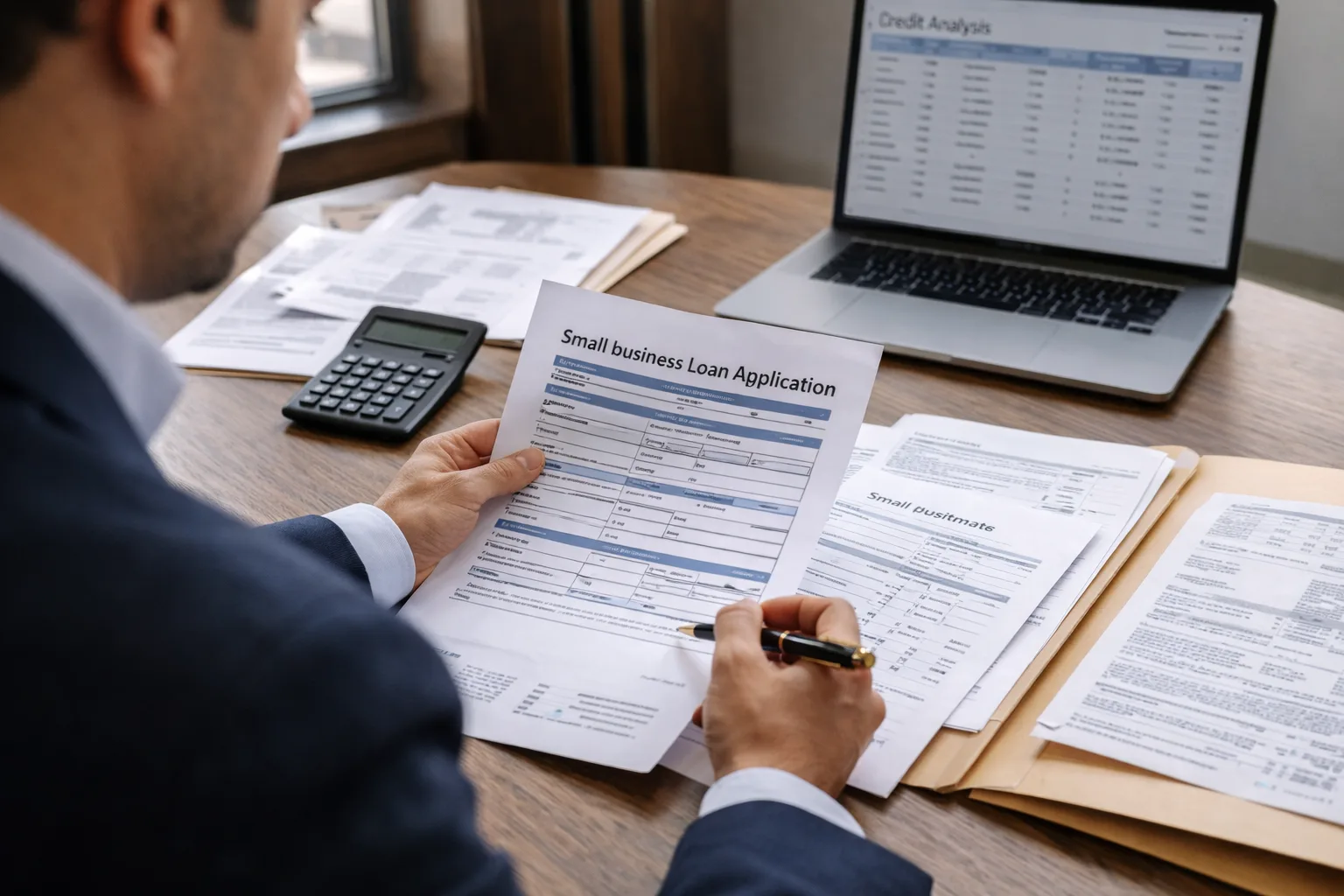
Lenders evaluate several factors when pricing your spread:
Your credit history: Personal scores below 680 trigger higher markups. Banks pull all three bureaus and scrutinize late payments, charge-offs, and how much of your available credit you’re using. Your business credit matters too, but since you’re personally guaranteeing the loan, your FICO score carries more weight.
Cash flow coverage: Lenders calculate your debt service coverage ratio—basically, how much cash you generate compared to what you owe. A ratio of 1.25 means you’re producing $1.25 for every dollar of debt payments. Hit this threshold or better, and you’ll justify lower rates. Barely scraping by at 1.05? Your spread goes up.
What you’re putting up: Real estate with a clear title gets you better pricing than inventory or accounts receivable. Banks know they can sell property if things go south. Liquidating your customer list or used restaurant equipment? Much harder. Stronger collateral drops your spread by 0.25% to 0.5%.
Your industry: Restaurants and retail stores fail at higher rates than accounting firms or medical practices. If you’re in a volatile sector, expect a premium of 0.5% to 1% over safer industries.
How long you’re borrowing: Ten-year terms expose the bank to more risk than five-year terms. You’ll typically pay an extra 0.25% for doubling your repayment period.
The SBA’s spread caps protect you from outrageous pricing, but they don’t guarantee you a deal. One bank might quote prime plus 3.75% while another offers prime plus 2.5% for the identical loan. This is why shopping around isn’t optional.
Requirements That Affect Your SBA 7(a) Loan Rate
Getting approved for an SBA 7(a) loan and getting a good rate are two different accomplishments. Current SBA 7a loan rates requirements go beyond basic eligibility.
Credit score impact: Most lenders won’t even talk to you below 640. They prefer 680 as a minimum. But here’s the reality—anything under 700 usually gets you priced at or near the maximum spread the SBA allows. Cross 750, and suddenly you’ve got leverage to negotiate. The difference between a 680 and 760 score can easily be a full percentage point in rate.
Common trap: thinking your business credit score alone matters. It doesn’t. Since you’re signing a personal guarantee, lenders underwrite your personal credit with equal or greater scrutiny. Your business might have an 80 Paydex score, but if you personally carry a 620 FICO, you’re getting declined or paying top dollar.
What you’re pledging as security: The SBA requires lenders to secure loans “to the extent possible”—vague language that gives everyone flexibility. Loans under $50,000 often move forward with minimal collateral. Go bigger, and lenders want liens on business assets, sometimes your home.
Offering your real estate as collateral can shave 0.25% to 0.5% off your rate. Property is stable, liquid security that banks understand. Equipment and inventory help, but their liquidation value is uncertain, so they don’t move the rate needle as much.
Your financial track record: Lenders dig into two or three years of tax returns, profit-and-loss statements, and balance sheets. They’re hunting for consistent profitability, reasonable debt levels, and positive momentum.
Show them 15% revenue growth and expanding margins, and you’ll get better pricing than a business with flat sales, even if both turn a profit. They also review cash flow statements line by line to verify you’re generating enough to cover existing debts plus this new payment.
Industry classification: Certain sectors just cost more to finance. Restaurants, bars, and seasonal businesses regularly face spreads 0.5% to 1% higher than professional services or healthcare. Lenders apply actuarial default data from thousands of loans when setting your price.
Loan maturity: Shorter payback periods reduce the bank’s exposure window. A five-year loan might come in at prime plus 2.5%, while the same borrower faces prime plus 2.75% on a ten-year structure. The difference compounds significantly over time.
The SBA 7(a) Loan Application Process and Rate Lock
Understanding the current SBA 7a loan rates process helps you time your application and manage expectations around when your rate gets set.
Step 1: Initial screening (1–2 weeks): You submit basic information—recent financials, credit authorization, short summary of your business and loan purpose. Lenders respond with preliminary estimates of rates and terms. These aren’t binding, but they give you a comparison shopping baseline.
Step 2: Full application submission (2–4 weeks): Now comes the heavy lift. You’re pulling together personal and business tax returns for three years, current financial statements, business licenses, lease agreements, detailed use-of-funds documentation. The lender orders credit reports, and if you’re buying property, they arrange appraisals and environmental reviews.
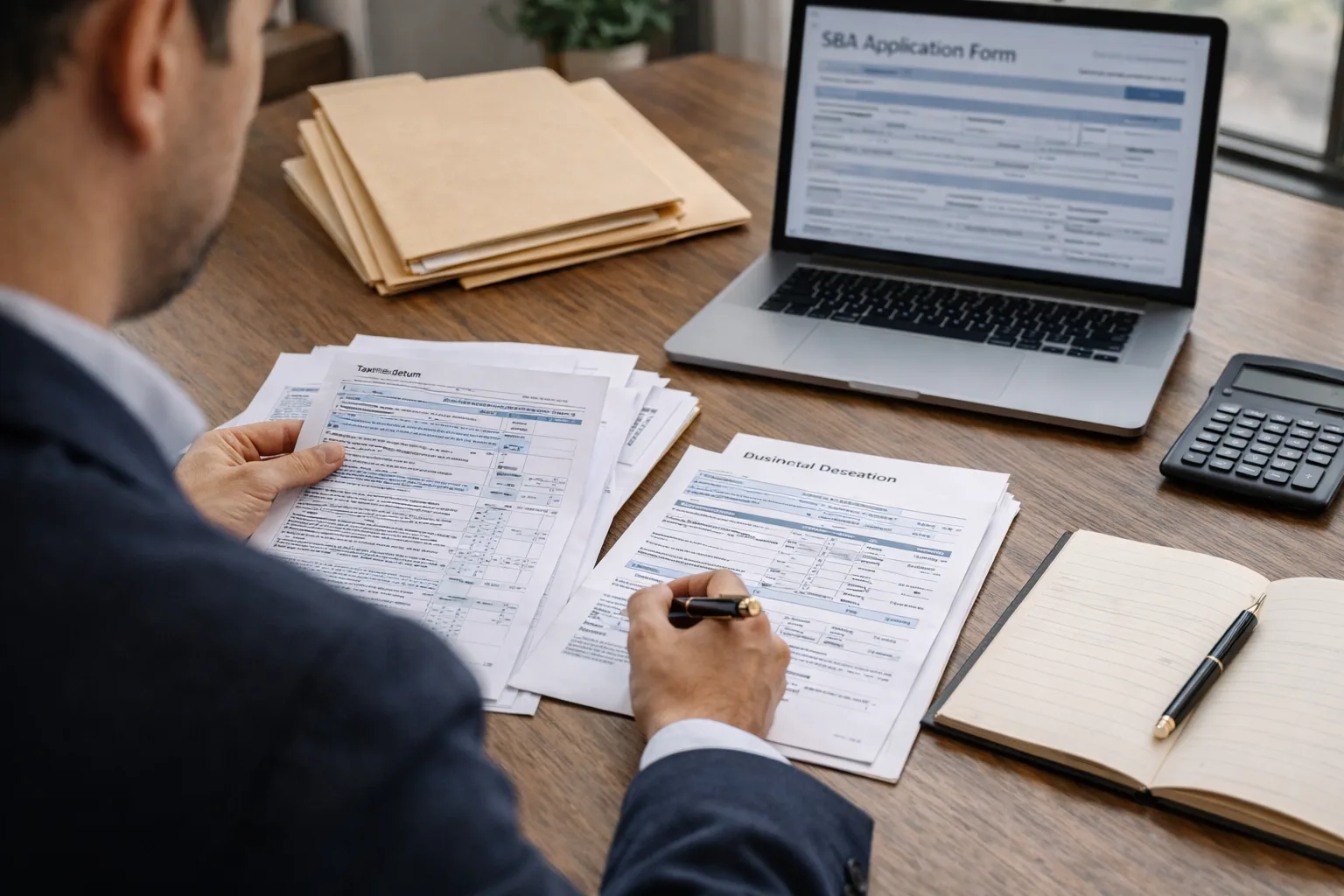
Step 3: Underwriting and SBA approval (3–6 weeks): Your lender analyzes everything, then sends the package to the SBA for guarantee approval. The SBA verifies you meet eligibility requirements and that your loan purpose fits program guidelines. Expect requests for additional documentation or clarification during this phase—it’s standard, not a red flag.
Step 4: Approval and commitment (1 week): The SBA issues a loan number. Your lender sends a commitment letter with final terms, including your interest rate. This is typically when your rate gets locked—you’re protected from increases during the closing period. Most locks run 30 to 60 days, though this varies by lender.
Step 5: Closing and funding (1–2 weeks): You sign loan documents, provide insurance certificates, and satisfy any remaining conditions. The lender releases funds. Your first payment comes due 30 days later.
Total timeline from application to cash in hand: 8 to 14 weeks. Your rate can shift during underwriting if you’re going variable, but once the lender locks your spread over prime, that relationship stays fixed.
One wrinkle: if closing drags past your rate lock expiration, some lenders offer extensions for a fee—usually 0.125% of the loan amount per 15-day extension. You’ll need to decide whether paying that fee beats accepting whatever rate prime has moved to.
Real-World SBA 7(a) Loan Rate Examples
Looking at current SBA 7a loan rates example scenarios makes the abstract concrete.
Scenario 1: $75,000 for working capital, 7-year payback
– Borrower profile: 720 credit score, three years operating, profitable each year
– Final rate: 7.50% prime + 2.75% spread = 10.25%
– Monthly payment: $1,197
– Total interest over life of loan: $25,348
This borrower’s solid credit and established track record earned a middle-of-the-road spread. The variable structure means quarterly payment adjustments as prime moves.
Scenario 2: $250,000 equipment purchase, 10-year term
– Borrower profile: 680 credit score, two years in business, breaking even
– Final rate: 7.50% prime + 3.50% spread = 11.00%
– Monthly payment: $3,453
– Total interest paid: $164,360
The longer term and marginal credit pushed the spread higher. This borrower accepted variable pricing to avoid paying the fixed-rate premium.
Scenario 3: $500,000 business acquisition, 10-year term, fixed rate
– Borrower profile: 760 credit score, acquiring profitable company with strong cash flow
– Final rate: Fixed 10.50% (equivalent to roughly prime + 3% plus the fixed premium)
– Monthly payment: $6,790
– Total interest paid: $314,800
This buyer paid a 0.50% premium for rate certainty, valuing budget predictability over the possibility of savings if prime drops.
Scenario 4: $20,000 startup financing, 5-year term
– Borrower profile: 650 credit score, new business with minimal history
– Final rate: 7.50% prime + 4.50% spread = 12.00%
– Monthly payment: $445
– Total interest paid: $6,700
Small loans and startup risk combine to hit the maximum allowable spread. The borrower’s planning to refinance once the business establishes a two-year track record.
These examples demonstrate how loan size, term, and borrower strength interact to determine your final cost. Plug your own numbers into a loan calculator to see whether the payment fits your budget comfortably.

SBA 7(a) Loan Rates by Loan Amount and Term (2026)
| Loan Amount | Repayment Period | Maximum Allowable Spread | Typical Rate Range | Estimated Monthly Payment (per $100K borrowed) |
|---|---|---|---|---|
| Under $25K | Up to 10 years | Prime + 4.50% | 11.50% – 12.00% | $1,380 – $1,400 |
| $25K – $50K | Up to 10 years | Prime + 4.50% | 11.00% – 12.00% | $1,350 – $1,400 |
| $50K – $250K | Under 7 years | Prime + 3.00% | 10.00% – 10.50% | $1,200 – $1,230 |
| $50K – $250K | 7 – 10 years | Prime + 3.25% | 10.25% – 10.75% | $1,320 – $1,350 |
| Over $250K | 7 – 10 years | Prime + 3.25% | 9.75% – 10.50% | $1,280 – $1,330 |
Based on prime at 7.50% in early 2026. Your actual rate depends on credit profile, collateral, and individual lender pricing. Monthly payment estimates reflect a 10-year amortization.
How to Qualify for the Lowest SBA 7(a) Rates
Landing competitive pricing takes preparation and strategy. Use this current SBA 7a loan rates guide to position yourself for success.
Clean up your credit before applying: Give yourself three to six months to address issues. Pay revolving balances down under 30% utilization, dispute errors on your credit reports, and avoid new credit applications. A 40-point score bump can cut your spread by half a percentage point.
Strengthen your financials: Banks favor consistent profits and manageable leverage. If your debt-to-equity ratio is above 3:1, consider injecting owner equity or paying down existing obligations before you apply. Clean, organized financial statements signal professionalism and make underwriting smoother.
Get quotes from multiple lenders: Spreads vary wildly. Community banks, credit unions, and online lenders all participate in the SBA program, and each prices differently. Collect quotes from at least three sources and compare not just rates but also fees, timelines, and service quality.
Negotiate your spread: Most borrowers don’t realize this is negotiable. If you get quoted prime plus 3.25%, counter by asking for 2.75%. Cite your strong credit or offer to consolidate other banking relationships. Lenders have discretion within SBA caps and will adjust pricing for desirable borrowers.
Put more money down: A down payment of 20% or more reduces loan-to-value ratio and lender risk. Some banks reward this with rate reductions of 0.25% to 0.5%.
Select your term carefully: Shorter maturities mean lower rates but bigger monthly payments. If cash flow can handle it, choosing a seven-year term over ten-year saves thousands in interest and reduces your rate.
Submit a complete package upfront: Missing documents delay underwriting and can cause lenders to increase spreads because they perceive you as disorganized. Provide tax returns, financial statements, business plans, and legal documents immediately, organized in a clear format.
Work with SBA-preferred lenders: These banks have delegated authority to approve loans without waiting for SBA review, cutting weeks from your timeline. They often offer better rates because they process higher volume and understand program nuances.
Time your rate lock strategically: If you expect prime to rise, lock immediately upon approval. If rates are falling, ask whether your lender allows float-down provisions that let you capture a lower rate if prime drops before you close.
Expert Insight
Too many borrowers fixate on the interest rate and ignore everything else. When you factor in packaging fees, prepayment penalties, and servicing differences, a loan priced at prime plus 2.5% with a 3% origination fee can cost you more over five years than one at prime plus 2.75% with zero fees. Calculate the effective rate and compare total cost before you sign anything.
Jennifer Martinez, Senior Vice President at Capital Business Lending.
FAQs
Prime is at 7.50% in early 2026. This serves as the foundation for most 7(a) loan pricing, with lenders adding 2.25% to 4.75% depending on your loan size, term, and qualifications. Prime moves in response to Federal Reserve actions—we saw it drop from 8.50% to current levels through three rate cuts in late 2025.
With variable-rate loans, they adjust quarterly based on prime rate movements—but your spread over prime stays locked. If you close at prime plus 2.75% and prime jumps from 7.50% to 8.00%, your rate increases from 10.25% to 10.75%. Fixed-rate loans remain constant after closing.
Generally, yes. The government guarantee reduces lender risk, enabling better pricing than unsecured conventional financing. A typical 7(a) loan at 10% to 11% beats conventional term loans at 11% to 15% and lines of credit at 12% to 18%. The tradeoff is more documentation and longer approval timelines with SBA financing.
Most lenders reset rates quarterly—January 1, April 1, July 1, and October 1. The adjustment reflects the prime rate published in the Wall Street Journal on the final business day of the preceding quarter. Some lenders adjust monthly or annually, so verify the adjustment schedule in your loan documents.
SBA 7(a) rates in 2026 reflect market conditions, government regulation, and your individual risk profile. With prime at 7.50% and typical spreads running 2.25% to 4.75%, most borrowers land between 9.75% and 12.25%—competitive financing for small businesses that might otherwise face double-digit rates or struggle to qualify for conventional loans.
Your final rate hinges on factors you control: credit scores, financial performance, collateral quality, and lender selection. Spending time to improve your credit, organize documentation thoroughly, and collect multiple quotes can save thousands of dollars over your loan’s duration.
Knowing how rates get calculated, when they lock in, and how they vary across loan sizes gives you confidence to negotiate effectively and choose terms aligned with your business objectives. Whether you’re financing equipment, acquiring a competitor, or funding expansion, the 7(a) program delivers flexible, accessible capital—once you understand how to navigate the rate structure.