

- How Personal Credit Affects Business Loan Approval
- Types of Business Loans Available with Bad Personal Credit
- Business Loan Requirements When You Have Bad Credit
- The Application Process for Bad Credit Business Loans
- Real-World Example of Getting Approved with Poor Credit
- Strategies to Improve Your Approval Odds
- Common Mistakes to Avoid When Applying
- Comparison of Business Loan Options for Bad Credit
Yes, you can get a business loan with bad personal credit—but the path looks different than it does for borrowers with strong credit histories. While traditional banks typically require personal credit scores of 680 or higher, alternative lenders, specialized financing companies, and certain government-backed programs offer viable options for entrepreneurs whose personal credit has taken a hit.
The reality is that roughly 40% of small business loan applications involve owners with credit scores below 640. Lenders have adapted to this market reality by developing products that weigh other factors more heavily: business revenue, time in operation, cash flow patterns, and available collateral. The trade-off usually comes in the form of higher interest rates, shorter repayment terms, or additional security requirements.
Understanding which lenders work with challenged credit, what they require, and how to position your application makes the difference between rejection and funding.
How Personal Credit Affects Business Loan Approval
Most small business owners discover quickly that their personal credit history matters—sometimes more than they expected. Lenders check personal credit for several reasons, particularly when dealing with newer businesses or those without established business credit profiles.
Banks and alternative lenders view personal credit as a proxy for financial responsibility and risk management. A score below 600 signals to lenders that you’ve struggled with debt obligations, missed payments, or experienced serious financial setbacks like bankruptcy or foreclosure. This doesn’t automatically disqualify you, but it shifts you into a higher-risk category that triggers different underwriting standards.
The relationship between personal and business credit becomes especially important for businesses operating for fewer than two years. Without a track record of business performance, lenders rely heavily on the owner’s personal financial behavior. Even established businesses with strong revenue often face personal credit checks because most small business loans require a personal guarantee—meaning you’re personally liable if the business defaults.
Personal credit scores below 580 are considered poor, scores between 580-669 fall into the fair range, and anything above 670 is generally viewed as good to excellent. Each 20-point drop in your score can increase your interest rate by 1-2 percentage points or reduce your maximum loan amount by 15-25%.
Sole proprietorships and single-member LLCs face the closest scrutiny on personal credit because the legal separation between owner and business is thin. Corporations and multi-member LLCs with established business credit profiles may find lenders place slightly less emphasis on personal scores, though they rarely ignore them entirely.
One critical point: lenders distinguish between old credit problems and recent ones. A bankruptcy from five years ago with clean credit since then tells a different story than multiple 90-day delinquencies from last year. The trajectory matters as much as the number.

Types of Business Loans Available with Bad Personal Credit
The business financing landscape offers multiple pathways when your personal credit isn’t strong. Each option carries distinct advantages, costs, and qualification criteria.
Secured vs. Unsecured Options
Secured loans require collateral—assets the lender can seize if you default. This collateral might include business equipment, real estate, inventory, or even personal assets like your home or vehicle. By offering security, you reduce the lender’s risk, which often compensates for weak personal credit. Equipment financing represents a common secured option where the equipment itself serves as collateral. If you’re purchasing a $50,000 commercial vehicle, the lender holds a lien on that vehicle.
Invoice financing and accounts receivable factoring are semi-secured arrangements where your outstanding invoices serve as collateral. A factoring company might advance you 80% of your invoice value immediately, then collect directly from your customer. Your credit matters less than your customers’ creditworthiness and payment history.
Unsecured loans don’t require specific collateral but typically demand personal guarantees. These are harder to obtain with poor credit but not impossible. Lenders compensate for the added risk with higher interest rates—sometimes 18-35% APR compared to 7-12% for secured options.
Merchant cash advances (MCAs) technically aren’t loans but advances against future credit card sales. MCA companies care more about your daily card volume than your credit score. A restaurant processing $30,000 monthly in card transactions might qualify for a $20,000 advance even with a 540 credit score. The cost is steep—effective APRs often exceed 40%—but approval is quick and credit requirements are minimal.
Alternative Lenders vs. Traditional Banks
Traditional banks maintain the strictest credit requirements, typically requiring scores above 680 and two years of profitable operations. They offer the best rates—currently 6-11% for term loans in 2026—but approve fewer than 25% of applications from borrowers with credit below 640.
Alternative lenders include online platforms, fintech companies, and specialized business finance firms. Companies like BlueVine, Fundbox, and OnDeck use automated underwriting that evaluates dozens of data points beyond credit scores. They might approve a business with $300,000 in annual revenue and 18 months of operation even if the owner’s credit score is 590. Rates run higher—12-30% typically—but funding happens in days rather than weeks.

Credit unions often occupy a middle ground. They maintain stricter standards than alternative lenders but show more flexibility than national banks. A credit union might approve a member with a 620 score if the business shows strong cash flow and the owner can explain past credit problems.
Microloans from nonprofit lenders and Community Development Financial Institutions (CDFIs) specifically target underserved borrowers. These programs offer loans from $500 to $50,000 with credit score minimums as low as 575. The application process includes business coaching and financial education, and rates typically range from 8-16%.
SBA microloan programs work through intermediary lenders and focus on startups and businesses in economically disadvantaged areas. While the SBA doesn’t set a minimum credit score, most intermediaries look for scores above 600. The average microloan in 2026 is around $15,000 with terms up to six years.
Business Loan Requirements When You Have Bad Credit
When your credit score is below 640, lenders scrutinize other aspects of your business more carefully. Understanding these requirements helps you prepare a stronger application.
Time in business becomes more critical. Most alternative lenders want at least six months of operation, though some merchant cash advance providers will work with businesses operating for just three months. Traditional banks typically require two years minimum, and that threshold rarely budges for weak credit.
Revenue requirements scale with credit quality. A borrower with a 720 credit score might qualify for a loan with $150,000 in annual revenue, while someone with a 590 score needs to show $250,000 or more. Lenders want to see that your business generates enough cash flow to service debt even if your personal financial management has been imperfect.
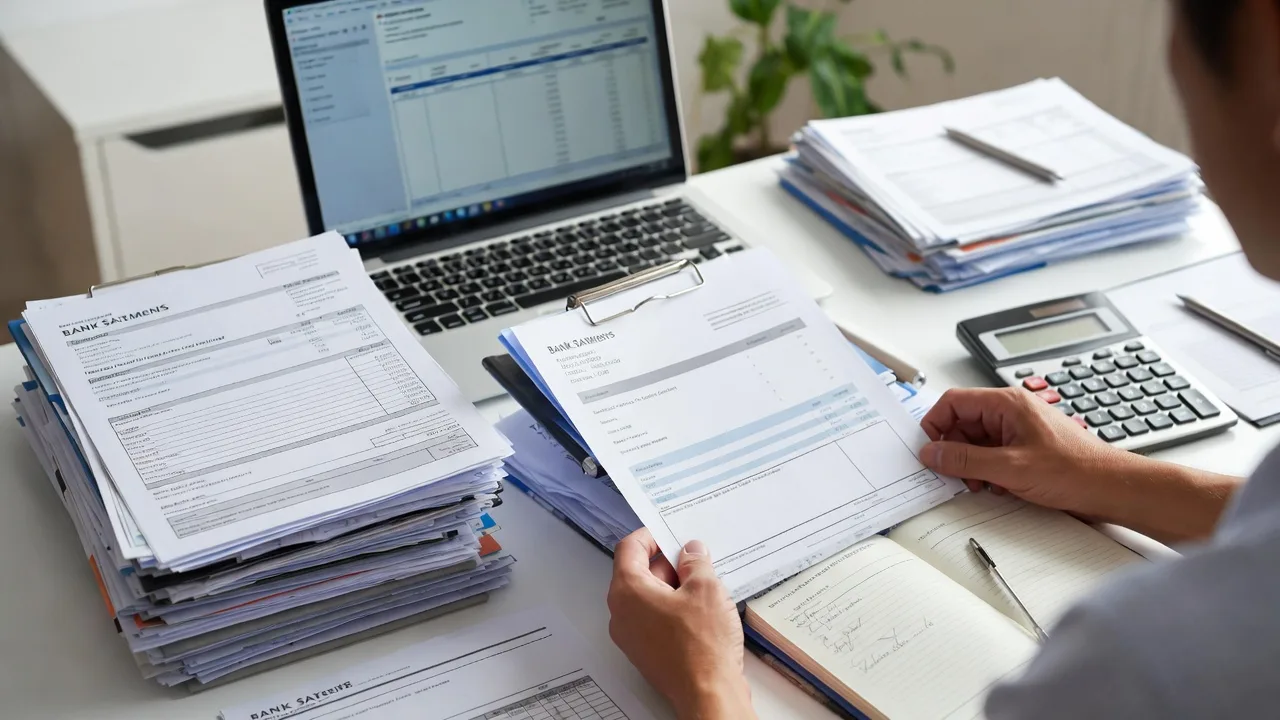
Documentation demands increase significantly. Expect to provide:
- 12-24 months of business bank statements showing consistent deposits
- Profit and loss statements and balance sheets
- Tax returns (both business and personal) for the past two years
- Accounts receivable aging reports if you’re applying for invoice financing
- Lease agreements or proof of business address
- Business licenses and registrations
Collateral often becomes mandatory rather than optional. Lenders may require a blanket lien on business assets or specific liens on equipment, inventory, or real estate. Some will ask for personal assets as secondary collateral.
Business credit scores matter when they exist. If your business has a Dun & Bradstreet PAYDEX score or Experian business credit profile, lenders will review it. A strong business credit score (80+ on the PAYDEX scale) can partially offset weak personal credit. Unfortunately, businesses younger than 18 months rarely have established business credit.
Personal guarantees are virtually universal for bad credit borrowers. You’ll sign documents making you personally liable for the debt, meaning lenders can pursue your personal assets if the business defaults.
Down payments or equity injections show skin in the game. A lender might approve a $75,000 equipment loan if you’re putting $25,000 down, even with a 610 credit score. This reduces the lender’s exposure and demonstrates your commitment.
The Application Process for Bad Credit Business Loans
The application process for borrowers with challenged credit requires more preparation than standard applications. Rushing through it increases rejection risk.
Start by pulling your credit reports from all three bureaus—Experian, Equifax, and TransUnion. Review them for errors, which appear on roughly 20% of reports. Dispute inaccuracies before applying, as even a 10-point score improvement can change your loan terms.
Gather financial documentation early. Lenders want recent statements, typically from the past 60 days. Having everything organized before you apply speeds the process and demonstrates professionalism.
Write a brief credit explanation letter. Address your credit issues directly—what happened, what you’ve done to correct course, and why your business is a good risk despite past problems. A two-paragraph explanation that acknowledges a divorce-related bankruptcy or medical debt collection carries more weight than hoping lenders won’t notice.
Research lenders who work with your credit profile. Applying to a bank that requires 700+ scores wastes time and generates a hard inquiry that temporarily lowers your score. Match your profile to appropriate lenders from the start.
Submit applications strategically. Multiple applications within 14 days for the same loan type typically count as a single inquiry for scoring purposes, but spacing applications over months creates multiple score impacts. Some borrowers use loan marketplaces that generate one inquiry but shop your application to multiple lenders.

Expect the initial response within 24-72 hours for online lenders, or 5-10 business days for banks and credit unions. Alternative lenders often provide instant pre-qualification based on basic information, followed by a full underwriting review.
Underwriters will request additional documentation. Respond quickly—delays signal disorganization or reluctance. If they ask for an explanation of a specific bank deposit or expense, provide clear, honest answers.
Approval comes with a term sheet outlining loan amount, interest rate, fees, repayment schedule, and collateral requirements. Read every line. The APR tells the true cost, accounting for interest and fees. A loan advertised at “12% interest” might carry a 19% APR once origination fees and other costs are included.
Funding timelines vary dramatically. Merchant cash advances and some online lenders fund within 24-48 hours of approval. SBA microloans might take 30-45 days from approval to funding. Factor these timelines into your business planning.
Real-World Example of Getting Approved with Poor Credit
Consider Maria, who owns a commercial cleaning service in Phoenix. She built her business to $380,000 in annual revenue over 18 months but carried a 595 credit score due to credit card defaults during a previous business failure three years earlier.
Maria needed $45,000 to purchase cleaning equipment and hire two additional employees for a new contract. She approached her bank first, which declined her application within a week, citing insufficient time in business and below-minimum credit scores.
She then applied to an alternative online lender specializing in revenue-based financing. The application took 30 minutes and required linking her business bank account and accounting software. The lender’s algorithm analyzed her cash flow patterns, customer payment consistency, and revenue growth trajectory.
Within 48 hours, she received approval for $40,000—slightly less than requested. The terms included:
- 18-month repayment period
- 24% APR (significantly higher than the 8% her bank would have charged with better credit)
- Daily automated payments of $147 drawn from her business checking account
- 3% origination fee ($1,200 deducted from the funded amount)
- Personal guarantee but no specific collateral requirement
Maria accepted the terms. The total repayment amount was $53,460 over 18 months. While expensive, the financing allowed her to fulfill the new contract worth $180,000 annually. She used the increased cash flow to pay down the loan early (no prepayment penalty) and rebuild her credit. Fourteen months later, she refinanced the remaining balance with a credit union at 11% APR, saving thousands in interest.
This example illustrates several realities: alternative lenders fill gaps traditional banks won’t, higher costs are the price of access when credit is weak, and successful loan performance can open doors to better financing later.
Strategies to Improve Your Approval Odds
Several tactical moves increase your chances of approval when working with less-than-perfect credit.
Build business credit separately from personal credit. Open trade accounts with suppliers that report to business credit bureaus. Pay invoices early or on time consistently. Apply for a business credit card and use it for small recurring expenses, paying the balance monthly. Even six months of positive business credit reporting can shift lender perception.
Find a creditworthy co-signer or co-borrower. A business partner, spouse, or investor with strong credit who signs alongside you dramatically improves approval odds and often secures better rates. The co-signer assumes equal responsibility for repayment, so this requires trust and clear agreements.
Offer substantial collateral even when it’s not required. Proactively pledging equipment, inventory, or real estate shows confidence in your ability to repay and reduces lender risk. This can convert a decline into an approval or reduce your interest rate by several points.
Improve cash flow documentation. Clean, organized financials demonstrate business stability. Use accounting software like QuickBooks or Xero to produce professional reports. Consistent monthly revenue with minimal volatility signals lower risk than erratic income patterns, even if average revenue is similar.
Request smaller loan amounts. Asking for $25,000 instead of $50,000 increases approval likelihood. You can always apply for additional funding later after establishing a positive payment history with the lender.
Pay down existing debt before applying. Reducing your debt-to-income ratio—even by $200-300 monthly—can tip the scales toward approval. Focus on paying off collections and bringing any 30-day late accounts current.
Explain your credit situation proactively. Don’t wait for the lender to ask. A brief, honest explanation of past problems and current stability helps underwriters see you as a complete person rather than just a credit score.
Consider timing strategically. If your credit problems are aging off your report in three months, waiting might be worthwhile. Negative items typically remain for seven years (ten for bankruptcies), but their impact diminishes significantly after 24-36 months.
Common Mistakes to Avoid When Applying
Borrowers with challenged credit often sabotage their applications through preventable errors.
Applying to too many lenders simultaneously creates multiple hard inquiries that further damage your score. Each hard pull can drop your score 3-5 points, and numerous recent inquiries signal desperation to lenders. Space applications strategically or use soft-pull pre-qualification tools first.
Misrepresenting financial information is both unethical and counterproductive. Lenders verify income, revenue, and financial statements. Inflating numbers leads to immediate denial and potential fraud allegations. Honesty about challenges, paired with strong business fundamentals, works better than exaggeration.
Ignoring predatory loan terms is dangerous. Some lenders targeting desperate borrowers charge effective APRs exceeding 60%, include hidden fees, or impose harsh default penalties. Read all terms carefully. If you don’t understand something, ask for clarification or consult an accountant. A bad loan can accelerate business failure rather than prevent it.
Failing to compare multiple offers leaves money on the table. Even among bad credit lenders, rates and terms vary significantly. One lender might offer 22% APR while another charges 29% for similar loans. Shopping around could save thousands.
Neglecting to address credit report errors costs approvals. One in five credit reports contains errors that could affect lending decisions. Disputing incorrect late payments or accounts that don’t belong to you might raise your score enough to qualify for better terms.
Applying before you’re ready wastes opportunities. If your business bank statements show numerous overdrafts from last month, wait until you have three months of clean banking history. First impressions matter, and a denial makes reapplication harder.
Overlooking alternative structures can limit options. Instead of a traditional term loan, consider whether equipment financing, invoice factoring, or a business line of credit might better fit your situation and credit profiled
Comparison of Business Loan Options for Bad Credit
| Loan Type | Min. Credit Score | Approval Speed | Interest Rate Range | Collateral Required |
|---|---|---|---|---|
| Traditional Bank Term Loan | 680-700 | 2-4 weeks | 6-12% | Often required |
| Online Alternative Lender | 600-620 | 1-5 days | 12-30% | Sometimes required |
| Merchant Cash Advance | 550-580 | 1-2 days | 40-60% APR equivalent | No |
| Invoice Factoring | 580-600 | 2-3 days | 15-35% (factor fee) | Invoices serve as collateral |
| Equipment Financing | 600-620 | 3-7 days | 8-20% | Yes (equipment purchased) |
| SBA Microloan | 575-600 | 3-6 weeks | 8-16% | Sometimes required |
| Business Line of Credit | 640-660 | 1-2 weeks | 12-25% | Varies by lender |
Expert Perspective:
Personal credit history influences small business lending decisions, but it’s not destiny. I’ve seen borrowers with 580 scores secure financing by demonstrating strong revenue trends, offering reasonable collateral, and showing they’ve addressed whatever caused their credit problems. The key is matching your profile to the right lender and telling your complete story, not just letting a three-digit number speak for you.
Jennifer Martinez
FAQs
Requirements vary by lender type. Traditional banks typically require 680-700 or higher. Alternative online lenders often work with scores as low as 600, while some merchant cash advance providers approve borrowers with scores in the 550-580 range. SBA microloans through CDFIs sometimes accept scores as low as 575. Your score determines not just approval but also interest rates, loan amounts, and terms. Generally, scores above 640 open significantly more options than those below 600.
A 500 credit score severely limits options but doesn’t make borrowing impossible. Merchant cash advances and invoice factoring focus primarily on business revenue and customer payment history rather than owner credit scores. Some equipment financing companies will work with very low scores if you’re purchasing equipment that serves as collateral. Microloans from nonprofit lenders occasionally approve borrowers below 550 if the business shows strong fundamentals and the owner completes financial education requirements. Expect very high costs—often 35-50% APR or higher—and smaller loan amounts, typically under $25,000.
Applying for business loans typically generates hard inquiries that can temporarily lower your personal credit score by 3-5 points per inquiry. The impact is minor and short-lived—usually recovering within a few months. Multiple inquiries for the same loan type within a 14-30 day window typically count as a single inquiry for scoring purposes. Some lenders offer soft-pull pre-qualification that doesn’t affect your score. The bigger risk is that denials might make subsequent lenders more cautious. Strategic application—targeting appropriate lenders rather than applying everywhere—minimizes both score impact and denial risk.
Yes, substantial collateral can often overcome weak personal credit. Secured loans using business equipment, real estate, inventory, or even personal assets like your home reduce lender risk significantly. Equipment financing is particularly accessible because the equipment itself serves as collateral—if you default, the lender repossesses it. Real estate-backed loans can accommodate very low credit scores if you have significant equity. The trade-off is risk: defaulting means losing the pledged assets. Collateral rarely eliminates credit requirements entirely but can lower the minimum score threshold by 50-100 points and reduce your interest rate by 5-10 percentage points compared to unsecured options.
Getting a business loan with bad personal credit is challenging but entirely feasible with the right approach. Your credit score influences approval and terms but doesn’t determine your fate. Alternative lenders, specialized financing products, and strategic positioning can open funding doors even when traditional banks say no.
The path forward involves honest assessment of your credit situation, thorough research into appropriate lenders, careful preparation of financial documentation, and realistic expectations about costs. Higher interest rates and shorter terms are the price of access when your credit history is imperfect, but successful loan performance rebuilds both your business and your creditworthiness over time.
Focus on what you can control: building business credit, strengthening revenue documentation, offering collateral when possible, and applying strategically to lenders who work with your profile. Avoid common pitfalls like misrepresenting information or accepting predatory terms out of desperation.
Remember that your current credit situation is temporary. Each on-time loan payment, each month of positive business performance, and each step toward financial stability improves your position for future financing needs. The loan you can get today with less-than-perfect credit can be the bridge to the better terms you’ll qualify for tomorrow.