

Need $75,000 to upgrade your restaurant’s kitchen? Maybe $300,000 to open a second retail location? A business term loan puts that capital in your account as a single deposit, and you’ll pay it back in regular chunks—usually monthly—over anywhere from one year to a decade.
Here’s what sets term loans apart from your other funding choices: you’ll know your exact payment amount from day one, you can’t re-borrow once you’ve spent the money, and the repayment schedule won’t change even if next month’s sales tank. That predictability helps with budgeting, but it also means you’d better have steady income to cover those payments.
We’ll walk through qualification benchmarks, actual costs beyond the advertised rate, and three real businesses that used term loans successfully—so you can figure out whether this type of financing makes sense for your situation.
What Are Business Term Loans?
Picture this: your lender wires $100,000 into your checking account on March 1st. Starting April 1st, you send back a chunk every month—say $2,200—until you’ve repaid the full principal plus interest. That’s a term loan in action.
The “term” refers to the repayment window, which might run twelve months, five years, or even longer. Each payment covers some interest and some principal, gradually shrinking your balance to zero by the final due date.
Now compare that to a business line of credit. With a credit line, you pull money when you need it, pay it down, then pull again—much like swiping a credit card and paying off the balance. You’re only charged interest on whatever you’ve actually drawn. A term loan doesn’t work that way. You get the full sum upfront, whether you plan to spend it all tomorrow or spread purchases over six months. Once that money’s gone, the loan is closed; you’d need to apply fresh if you want more capital.
Other financing flavors—merchant cash advances, invoice factoring, equipment leases—tie your repayment to daily credit-card sales, specific invoices, or the useful life of a machine. Term loans ignore those variables. Your payment is the same in a record-breaking sales month and during a slow January. That stability helps you forecast cash flow, but it also means you can’t dial down your obligation when revenue dips.
How Business Term Loans Work
Once your application clears underwriting, the lender sends the agreed amount—via wire transfer or ACH deposit—straight to your business bank account. You start making payments according to an amortization schedule, which is just a fancy term for a spreadsheet showing how much of each payment goes toward interest versus principal.
Interest rates swing wildly depending on who’s lending. A well-established manufacturer with a 720 credit score might lock in 5.5 % APR from a regional bank. A two-year-old e-commerce shop with a 620 score could pay 22 % APR through an online platform. Some lenders fix the rate at signing; others tie it to the prime rate or another benchmark, so it floats up or down over the loan’s life.
Loan terms dictate how long you’re on the hook. Agree to repay $100,000 over three years at 8 % APR, and you’ll fork over roughly $3,134 monthly, paying around $12,824 in total interest. Extend that to eight years at the same rate, and your monthly bill drops to about $1,383—but you’ll hand over $32,592 in interest by the finish line. Compact repayment windows trim your total cost; stretched-out schedules ease the monthly squeeze but pile on interest.
Amortization splits each payment between interest and principal. Early on, interest eats most of the payment because your balance is still high. As months pass and the principal shrinks, more of each installment attacks the principal itself. Lenders usually give you a full amortization table at closing, so you can see your balance dropping month by month and plan ahead for when you’ll be debt-free.
Short-Term vs. Long-Term Loans
Short-term deals—typically twelve to twenty-four months—suit urgent needs: stocking up before the holiday rush, covering payroll during a client’s slow-pay cycle, or grabbing a time-sensitive equipment deal. Payments arrive fast and heavy. Some lenders even pull small daily or weekly amounts directly from your bank account. Rates tend to be steeper because the lender’s administrative cost per dollar is higher, and borrowers willing to accept brutal payment schedules often signal cash-flow stress.
Long-term loans stretch three to ten years and match well with big-ticket purchases that pay off gradually—buying the building you’ve been leasing, replacing an entire fleet of delivery trucks, or launching a franchise location. Monthly payments stay manageable, preserving your working capital for day-to-day operations. The tradeoff: you’ll watch interest charges stack up year after year. Lenders also dig deeper during underwriting, requesting multi-year financial projections and hiring appraisers to value any property or equipment you’re pledging.
Secured vs. Unsecured Term Loans
A secured loan requires you to pledge something tangible—real estate, machinery, vehicles, even inventory—that the lender can repossess and auction if you stop paying. Collateral softens the lender’s downside, so you’ll usually enjoy a lower interest rate and higher borrowing ceiling. A food distributor might offer a $200,000 refrigerated warehouse as collateral for a $160,000 loan at 6.5 % APR, while the same company seeking an unsecured $160,000 loan might face 14 % APR or outright rejection.

An unsecured loan hinges entirely on your financials and credit history. No physical assets change hands if you default, so the lender’s loss is total. To compensate, they’ll scrutinize your revenue trends, profit margins, and credit scores more intensely. Unsecured loans cap out lower—many online lenders won’t go above $500,000 without collateral—and demand proof of consistent cash flow, often two or three years of tax returns showing steady income. If your books look shaky or your credit score sits below 650, expect either a rejection or an offer with a punishing rate.
Business Term Loan Requirements
Lenders check five essentials: your credit scores (both personal and business), revenue history, how long you’ve been operating, what collateral you can offer, and the quality of your financial paperwork. Clearing every hurdle doesn’t guarantee a “yes,” but falling short in one category usually triggers a “no” or a counteroffer loaded with fees.
Credit score minimums vary by institution. Traditional banks want personal FICO scores north of 680 and business credit scores—like your FICO Small Business Scoring Service or Dun & Bradstreet PAYDEX—above 75. Online lenders might work with personal scores around 600, though they’ll compensate with higher rates and tighter loan caps. Drop below 600, and you’ll almost certainly need a co-signer who has stronger credit or collateral that covers the full loan amount.
Revenue thresholds prove you generate enough cash to service the debt. Big banks typically want at least $500,000 in annual sales and two consecutive years of profitability. Alternative lenders might approve companies doing $100,000 per year, but they’ll limit the loan to a multiple of your monthly revenue—commonly three to six times—and tack on a steep APR.
Time in business signals staying power. Most banks insist on three years of operating history before they’ll underwrite a term loan. Online lenders sometimes approve businesses that have been around for just one year, though approval odds improve dramatically at the two-year mark. Startups with zero revenue history rarely qualify; they usually lean on SBA microloans, personal loans guaranteed by the founder, or angel investors.
Collateral becomes non-negotiable for secured loans and optional—but helpful—for unsecured applications. Lenders hire appraisers to value real estate, vehicles, and equipment, then advance 75 % to 85 % of that appraised figure. Real estate and titled machinery make the cleanest collateral; inventory and accounts receivable require ongoing audits and may justify a lower advance rate because their value fluctuates.
Documentation packages start with two years of business tax returns, current-year profit-and-loss statements, balance sheets, and bank statements covering the last three to six months. You’ll also submit a narrative explaining exactly what you’ll do with the loan proceeds. Banks often add personal tax returns from any owner holding 20 % or more equity, a business plan with revenue forecasts, copies of leases or franchise agreements, and corporate formation documents. Missing even one form can stall underwriting for weeks.

The Application and Approval Process
Landing a business term loan unfolds across five distinct checkpoints, each with its own clock and potential roadblocks.
1. Research lenders. Compare community banks, credit unions, online platforms, and SBA-backed programs. Banks deliver the lowest rates but enforce the toughest eligibility rules and take four to eight weeks to close. Online lenders promise verdicts in a day or two and wire funds within a week, swapping speed for higher APRs. SBA 7(a) loans marry attractive rates with flexible repayment windows, but underwriting stretches to two or three months when appraisals and environmental site assessments enter the mix.
2. Gather documents. Round up your tax returns, financial statements, bank statements, and legal paperwork—articles of incorporation, operating agreements, business licenses, franchise contracts. Store everything in a cloud folder so you can upload or email files instantly. Incomplete or outdated documents are the number-one cause of application delays, according to most underwriters.
3. Submit the application. Nearly every lender accepts online submissions now. You’ll input basics—legal business name, EIN, physical address, industry code, ownership structure—and answer questions about your desired loan size, intended use, and existing debts. Expect to authorize hard credit pulls on both your personal credit report and your business credit file.
4. Underwriting. The lender’s credit analysts comb through your financials, cross-checking revenue figures against bank deposits or IRS tax transcripts, and calculate your debt-service coverage ratio—net operating income divided by total debt payments. Most lenders want that ratio at 1.25 or higher, meaning your income exceeds your debt load by at least 25 %. If you’re pledging collateral, an independent appraiser inspects the assets and issues a valuation report. Underwriters often circle back with requests for extra documents or clarification on big deposits or withdrawals.
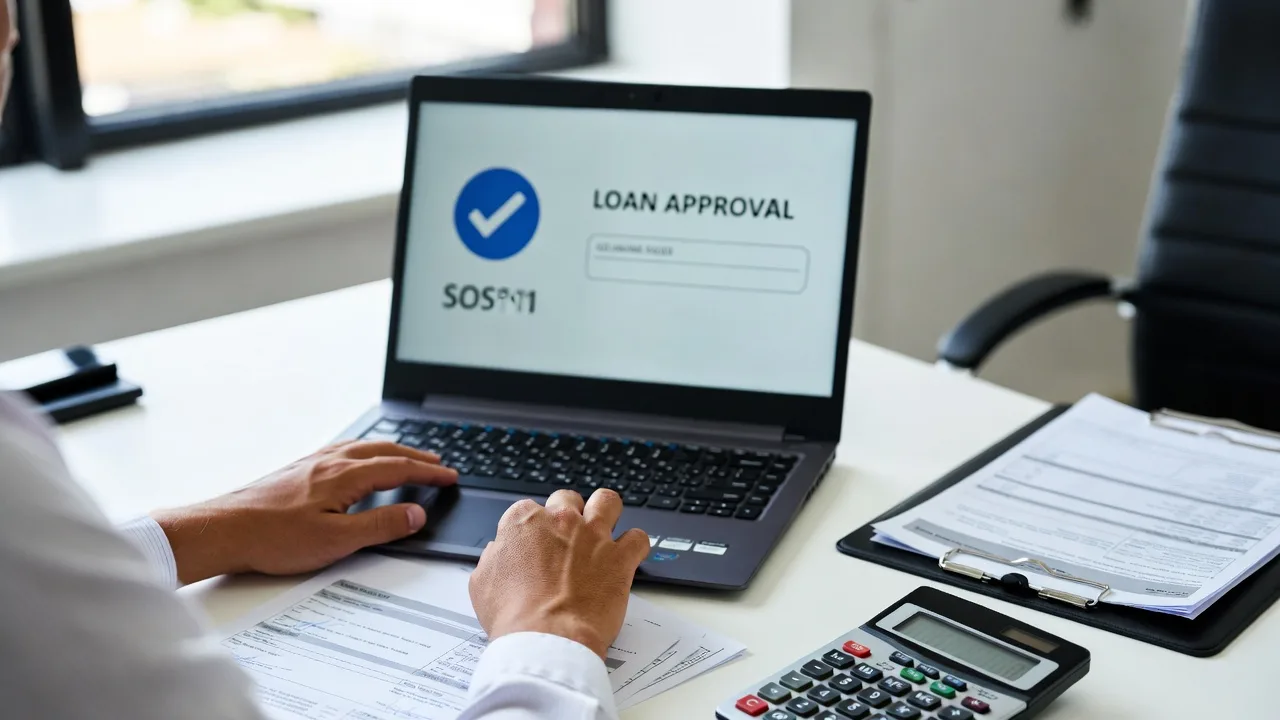
5. Funding. Approval produces a loan agreement spelling out the interest rate, payment schedule, all fees, financial covenants, and what happens if you default. Read every page—some contracts ban you from paying dividends or taking on new debt without lender consent, and others slap penalties on early repayment. Sign the agreement, and funds hit your account via wire within one to three business days for most online lenders, or up to a week for traditional banks.
Common Uses and Real-World Examples
Business term loans fund all kinds of investments. Here are three scenarios pulled from actual borrowers.
Equipment purchase: A regional HVAC company with twelve employees needed three replacement service vans and new diagnostic equipment—total price tag $120,000. The owner applied for a five-year secured loan at 6.5 % APR, using the vans as collateral. Monthly payments landed around $2,350, which fit easily into cash flow. Those new vans let the company accept more service calls, bringing in an extra $8,000 per month. The loan essentially paid for itself in eighteen months, and the improved equipment helped the business win a contract with a large property-management firm.
Business expansion: A boutique fitness studio in a college town wanted to open a second location fifteen miles away. Buildout, equipment, and initial marketing added up to $250,000. The owner secured a seven-year unsecured loan at 9 % APR from an online lender, leveraging three years of profitable operations and $600,000 in annual revenue. Monthly payments ran about $3,850. Membership dues from the original studio covered those payments while the new site ramped up. By the end of year two, the second location broke even. By year four, it contributed $75,000 annually to the company’s net income.
Inventory and working capital: A wholesale distributor landed a contract to supply a national retailer’s regional stores, but the purchase order required $80,000 upfront for inventory and payroll during the retailer’s 60-day payment cycle. The distributor took an 18-month loan at 14 % APR from an alternative lender, structured as weekly payments of roughly $1,100. That cadence matched the company’s cash-conversion cycle. The contract generated $200,000 in gross profit over twelve months, easily absorbing the $10,000 in interest and opening the door to additional orders from the same retailer.
Notice the pattern: each business financed something that produced revenue exceeding the borrowing cost. Steer clear of using term loans to patch recurring shortfalls—like covering the same payroll gap every month—because you’ll just dig a deeper hole.
Costs and Fees to Expect
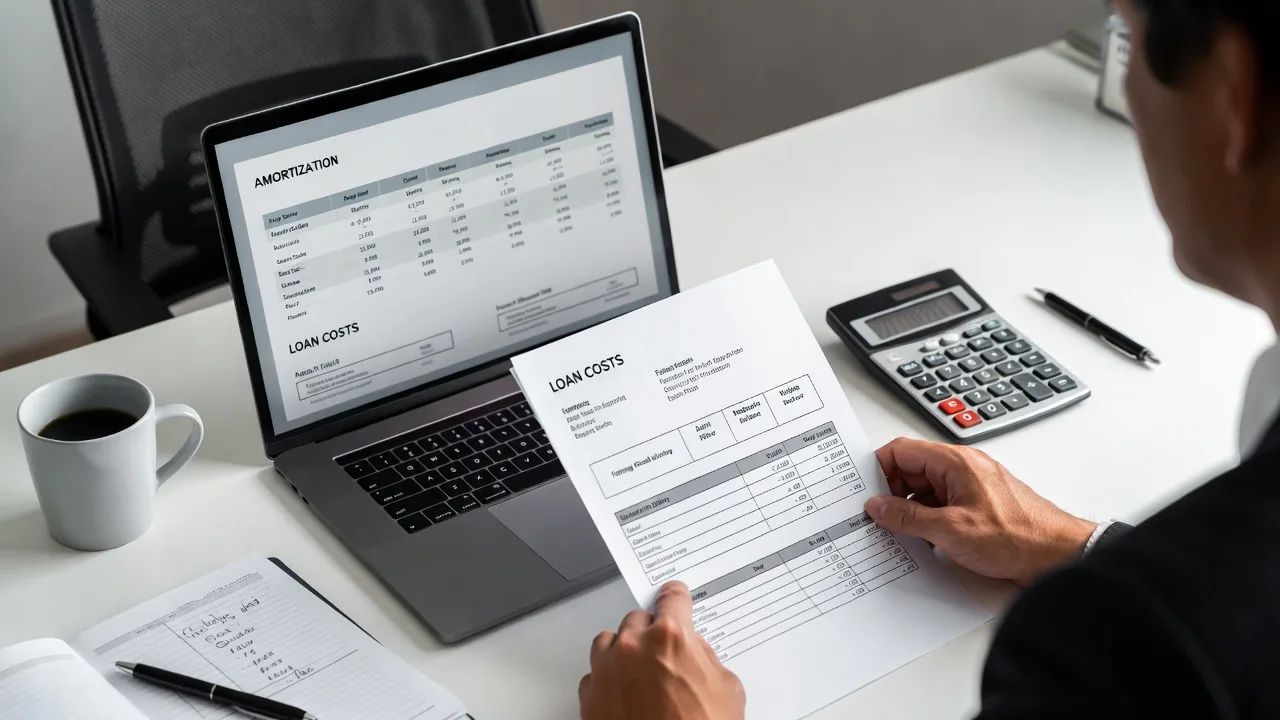
The advertised APR is only part of what you’ll actually pay. Add in origination fees, prepayment penalties, and assorted charges to calculate your true all-in cost.
Interest rates depend on who’s writing the check and how risky your profile looks. Right now in 2026, traditional banks quote 5 % to 11 % APR for borrowers with strong credit and collateral. Credit unions often beat banks by half a percentage point or more. Online lenders span 10 % to 40 % APR, with the top end reserved for newer companies or credit scores in the low 600s. SBA 7(a) loans cap rates at prime plus a lender markup, currently landing most borrowers between 11 % and 13 % APR.
Origination fees cover the lender’s cost to process and approve your loan. Banks might charge 1 % to 3 % of the principal, either deducted from your deposit or added to the amount you owe. Picture a $100,000 loan with a 2 % fee: you receive $98,000 but repay $100,000 plus interest, or the lender wires the full $100,000 and you owe $102,000 plus interest. Online lenders sometimes bake origination fees into a higher APR instead of itemizing them, so always compare the total dollar amount you’ll repay, not just the rate itself.
Prepayment penalties discourage paying off the loan ahead of schedule. Some lenders charge 2 % to 5 % of your remaining balance if you zero out the loan before a certain milestone—often two or three years in. Others use a sliding scale that shrinks each year. If a windfall or refinancing opportunity might let you retire the debt early, negotiate a no-penalty clause at the outset or pick a lender that doesn’t penalize prepayment.
Additional fees can sneak into the fine print: late-payment charges (typically $25 to $50 or a percentage of the overdue amount), wire-transfer fees ($15 to $30 per transaction), and annual maintenance or monitoring fees for secured loans. Check the fee schedule in your loan documents and factor these into your budget.
Let’s illustrate with numbers. You borrow $100,000 at 10 % APR over five years with a 2 % origination fee and zero prepayment penalty. Monthly payment: roughly $2,125. Total interest over 60 months: about $27,500. Origination fee: $2,000. All-in cost: $29,500, pushing your effective APR closer to 10.6 %.
Comparison Table: Business Term Loan Options by Lender Type
| Lender Type | Typical Loan Amount | Interest Rate (APR) | Approval Time | Credit Requirements | Best Use Case |
|---|---|---|---|---|---|
| Traditional Banks | $50,000–$5,000,000 | 5 %–11 % | 4–8 weeks | Personal 680+, business 75+ | Major capital projects, commercial real estate |
| Credit Unions | $10,000–$500,000 | 4.5 %–10 % | 3–6 weeks | Personal 660+, membership required | Equipment upgrades, expansion for members |
| Online Lenders | $5,000–$500,000 | 10 %–40 % | 24–48 hours | Personal 600+, $100k+ annual revenue | Quick funding, moderate-credit borrowers |
| SBA 7(a) Loans | $50,000–$5,000,000 | 11 %–13 % | 60–90 days | Personal 640+, robust financials | Long-horizon projects, property, refinancing |
Term loans work best when you’re buying something—equipment, real estate, a second location—that will throw off enough cash to cover the monthly payment and then some. If you’re just plugging holes in your operating budget, you’re postponing the problem instead of solving it.
Michael Torres
FAQs
Traditional banks look for personal FICO scores of 680 or better. Online platforms may approve applicants with scores near 600, though you’ll face higher rates and smaller maximums. If your score sits below 600, expect to put up substantial collateral or bring on a co-signer whose credit is stronger.
Online lenders often deliver decisions in 24 to 48 hours and transfer funds within three to seven days. Banks and credit unions need four to eight weeks because their underwriting process is more thorough. SBA-backed loans can drag out to 60 or 90 days, particularly when appraisals or environmental assessments are part of the deal.
It’s possible, but your options narrow fast. Alternative lenders focus on higher-risk borrowers, charging APRs from 20 % to 40 % and requiring personal guarantees or pledged assets. Loan sizes tend to stay small—$50,000 or less—and terms short. Spend a few months improving your credit score before you apply, and you’ll save thousands in interest charges.
An SBA loan is actually a specific flavor of term loan, backed by a partial guarantee from the Small Business Administration. That guarantee reduces the lender’s risk, which translates to lower rates and longer repayment windows for you. SBA 7(a) loans, for instance, go up to $5 million with repayment periods reaching 25 years on real-estate purchases. Non-SBA term loans come directly from banks or online lenders without any government backing, so they often carry stricter credit requirements or higher interest rates—but they close faster.
Most agreements allow early payoff, but watch for prepayment penalties—commonly 2 % to 5 % of whatever balance remains if you pay off within the first two or three years. Check your loan contract for that clause and try to negotiate it out if you plan to refinance or if you’re expecting a cash infusion from a sale or investor.
Loan sizes start as low as $5,000 and climb to $5 million. Banks and SBA lenders approve the largest amounts—up to $5 million—for established companies with solid financials and valuable collateral. Online lenders usually cap unsecured loans around $500,000. How much you can actually get depends on your revenue, credit scores, collateral value, and debt-service coverage ratio.
A business term loan hands you a lump sum of capital and a clear repayment roadmap, making it a strong fit for growth initiatives that deliver measurable returns. Understanding the distinctions between short and long repayment windows, secured versus unsecured structures, and different lender categories helps you pair the right loan with your company’s cash flow and strategic objectives.
Before you submit an application, confirm that your credit scores, revenue figures, and documentation meet the lender’s benchmarks. Calculate total borrowing costs—origination fees, potential prepayment penalties, and all other charges—to compare offers on equal footing. Most critically, verify that whatever you’re financing will throw off enough incremental profit to handle the debt service and still leave a cushion for surprises.
Used strategically, a term loan accelerates your plans without diluting ownership or surrendering control. Invest time in shopping lenders, negotiating terms, and modeling repayment scenarios, and you’ll set your business up to leverage borrowed capital effectively.