

Picture this: Your business just landed its biggest contract yet, but you need $75,000 to fulfill it. Or maybe you’re bleeding cash every winter and need a cushion to survive until spring. You’ve probably Googled “small business loans” at 2 AM, wondering if borrowing money will save your company or sink it.
Here’s the truth—loans work brilliantly for some businesses and destroy others. The difference? Understanding exactly when debt makes sense, what lenders actually want to see, and how to avoid the traps that catch most first-time borrowers.
We’ll break down the real scenarios where borrowing pays off, the ugly risks nobody talks about until it’s too late, what documentation you’ll actually need (not just what websites claim), and examples of businesses that either won or lost big with loans.
When Small Business Loans Make Sense
Debt becomes your friend when every dollar borrowed makes you two dollars back. Sounds simple, but most businesses can’t actually prove that math. Let’s look at situations where the numbers genuinely work:
You’ve got a contract in hand that needs upfront cash. Say a corporate client signs a $200,000 catering agreement for the next year. Problem is, you need $50,000 immediately for equipment and staff. The contract guarantees revenue that covers your loan payment plus profit. That’s not risky borrowing—that’s math.
Your revenue disappears seasonally but expenses don’t. Retail shops in beach towns make 80% of annual revenue in four summer months. The other eight months? Rent, utilities, and minimum staff still cost money. A $40,000 loan in November keeps the lights on until Memorial Day crowds return. Ski lodges face the opposite problem, borrowing through summer to prepare for winter.
New equipment directly increases what you can earn. A landscaping crew running three jobs daily with two trucks hits a ceiling. Buy a third truck for $35,000, and you can handle five jobs daily. If each job nets $200 profit and you work 200 days yearly, that’s an extra $80,000 annually. The truck loan costs maybe $700 monthly. This isn’t complicated.
Inventory purchases before your busy season with proven sales data. E-commerce sellers who’ve tracked three years of November-December sales know within 10% what they’ll sell. Borrowing $60,000 in September to stock up for holidays makes sense when you’ve got spreadsheets proving you’ll convert that inventory to $95,000 in sales by January.
Expensive debt is crushing you. Carrying $45,000 on business credit cards at 23% APR costs you over $10,000 yearly in interest alone. Refinancing with a term loan at 8% cuts that to $3,600. You pocket $6,400 immediately—but only if you stop racking up new credit card charges.
A loan should fuel growth, not just cover poor planning. Borrow with a clear ROI in mind
Marcus Chen
Notice the pattern? Successful borrowing always ties to specific, measurable outcomes. You should build a basic spreadsheet showing loan costs versus expected returns before talking to any lender.
Risks and Downsides to Consider Before Borrowing
Now for the part that makes borrowers lose sleep—and sometimes their businesses.
Payments hit your account whether you make money or not. Equity investors only profit when you do. Lenders? They want their $2,000 every single month, whether you had a great quarter or your biggest client just went bankrupt. Miss a few payments and watch late fees compound faster than you can imagine.
Your house becomes collateral you didn’t mean to risk. Most small business loans demand personal guarantees. Translation: If the business fails, lenders can seize your home, drain your personal bank accounts, or claim your car. Equipment loans sound safer—the equipment is collateral—but when they repossess your only delivery truck, you can’t operate at all.
Credit damage follows you for seven years. One 30-day late payment drops your credit score 60-80 points. A default? You’re looking at 100+ point drops on both business and personal credit. Good luck leasing office space, getting reasonable insurance rates, or borrowing for anything else. Future lenders see that history and either reject you or charge punishing interest rates.
The application process devours time with no guarantee. You’ll spend 20-40 hours gathering documents, filling applications, and answering follow-up questions. Then lenders reject about 70% of small business applications. Startups and businesses under two years old face rejection rates closer to 85%. That’s weeks of work for nothing.
Fine print restrictions limit your flexibility. Some lenders prohibit taking on additional debt without permission. Others require you to maintain specific cash balances or debt-to-income ratios. Violate these covenants (even accidentally) and they can demand immediate full repayment—forcing businesses into bankruptcy.
The death spiral of borrowing to cover operating losses. This kills more businesses than anything else. Revenue drops, so you borrow to cover payroll. Next month it’s still down, but now you’ve got loan payments too. You borrow more. Within six months you’re servicing debt with more debt, and bankruptcy becomes inevitable.

A restaurant owner in Denver learned this the hard way in 2025. She borrowed $80,000 to renovate her dining room right before the city started a downtown construction project. Street access disappeared for eight months. Revenue dropped 40%, but her $1,850 monthly loan payment never stopped. She exhausted savings, then maxed credit cards trying to stay open. Both the restaurant and her home (used as collateral) were gone by year’s end.
Small Business Loan Requirements You Must Meet
Lenders judge you on hard numbers. Here’s what actually matters:
Credit scores draw firm lines in the sand. Traditional banks want 680 minimum, with rates improving dramatically above 720. SBA loans sometimes accept 640 if everything else looks stellar. Online lenders might go as low as 600-620, but you’ll pay 18-30% interest at that level. Below 600? You’re basically shut out except for predatory lenders you should avoid anyway.
Revenue proves you can afford payments. Most lenders want $100,000 minimum annual revenue, many want $250,000+. They calculate something called DSCR—debt service coverage ratio. It divides your net operating income by total debt payments. A 1.25 DSCR means you earn $1.25 for every $1.00 you owe. That’s the minimum. Below 1.25 and most lenders reject you automatically.
Time in business separates startups from survivors. Banks strongly prefer two years of operating history with consistent revenue. Under two years? You’re fighting uphill. SBA microloans or specialized online lenders might work with newer businesses, but expect intense scrutiny of your business plan and personal finances. The younger your business, the more detailed your projections need to be.
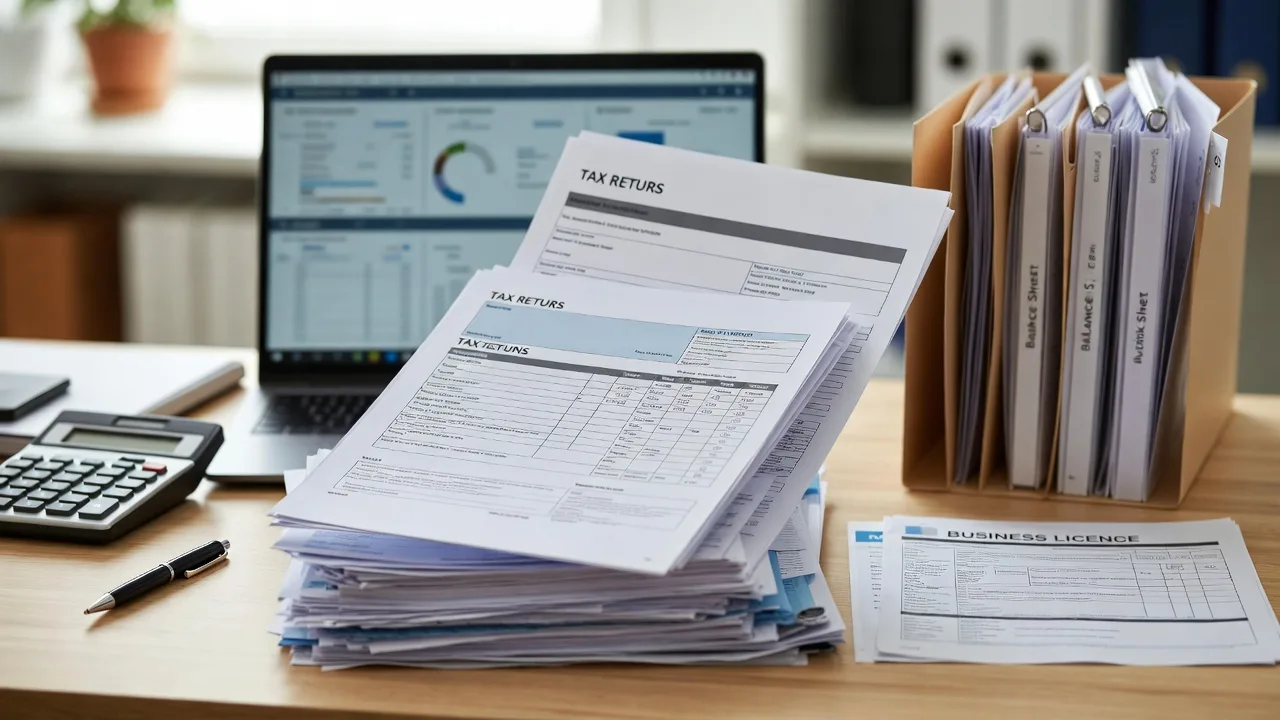
Documentation fills a small filing cabinet. Get ready to provide:
- Two to three years of complete business tax returns
- Personal tax returns for every owner holding 20% or more
- Monthly profit and loss statements for the past 12 months
- Current balance sheet listing all assets and liabilities
- Three to six months of business bank statements
- Copies of all business licenses and registrations
- Accounts receivable aging report (who owes you money)
- Accounts payable aging report (who you owe)
- Detailed business plan explaining how you’ll use the money
Collateral determines how much lenders risk. Secured loans need assets worth at least what you’re borrowing. Lenders typically advance 70-80% of equipment value or 50% of inventory value. Real estate can secure larger amounts. Unsecured loans exist but cap around $50,000 with higher interest rates and stricter credit requirements.
Your industry affects approval odds significantly. Some sectors are nearly impossible to finance. Cannabis businesses can’t access most traditional loans despite legalization. Adult entertainment, cryptocurrency, and speculative real estate face similar walls. Restaurants and retail get approved but face extra scrutiny because failure rates run higher than average.
Here’s a real example: A contractor with $400,000 annual revenue and strong cash flow applied for a $75,000 loan. His credit score sat at 655 because of a personal bankruptcy from four years earlier. Three banks rejected him instantly. An online lender approved him at 19% interest. An SBA Community Advantage lender approved him at 9.5% after he provided extra documentation explaining the bankruptcy (medical bills from his daughter’s illness). Same applicant, wildly different outcomes based on lender type.
How the Small Business Loan Process Works
Here’s the realistic timeline and steps, not the optimistic version lenders advertise:
Step 1: Figure out what you actually need (1-2 weeks). Pull your credit reports from all three bureaus and check for errors. Calculate exactly how much money you need—add 15% for unexpected costs because you’re underestimating. Determine what you can realistically pay monthly. Run different loan scenarios through online calculators. List what assets you could pledge as collateral.
Step 2: Research which lenders match your situation (3-7 days). Banks offer 5-8% rates but reject most applicants. SBA loans provide great terms but take forever. Online lenders approve quickly but charge 12-30%. Don’t waste time applying where you won’t qualify. A startup shouldn’t bother with traditional banks. A business with 750 credit and three years of strong financials shouldn’t pay online lender rates.
Step 3: Submit your application and documents (1-3 days). Applications missing information get ignored for weeks. Lenders process complete applications first. Double-check that your profit and loss statement matches your tax return. If there are discrepancies, write an explanation before they ask.
Step 4: Wait through underwriting review (1-6 weeks). The lender verifies everything you claimed. They’ll pull credit, call your bank, possibly visit your business. Expect requests for additional documents—this is normal. Applications missing information age out as lenders focus on complete files; respond to document requests within 24 hours or prepare to wait another week.
Step 5: Negotiate your approval terms (3-7 days). If approved, you’ll get a term sheet showing amount, rate, repayment schedule, fees, and restrictions. Read every line. Some terms are negotiable, especially origination fees and prepayment penalties. If the rate seems high, ask why and what could improve it. Sometimes pledging additional collateral drops the rate a full percentage point.
Step 6: Close and receive funds (3-10 days). After accepting terms, you’ll sign final paperwork. Money arrives anywhere from same-day (rare, some online lenders) to two weeks later (typical for banks and SBA). Funds usually transfer via ACH directly to your business checking account.
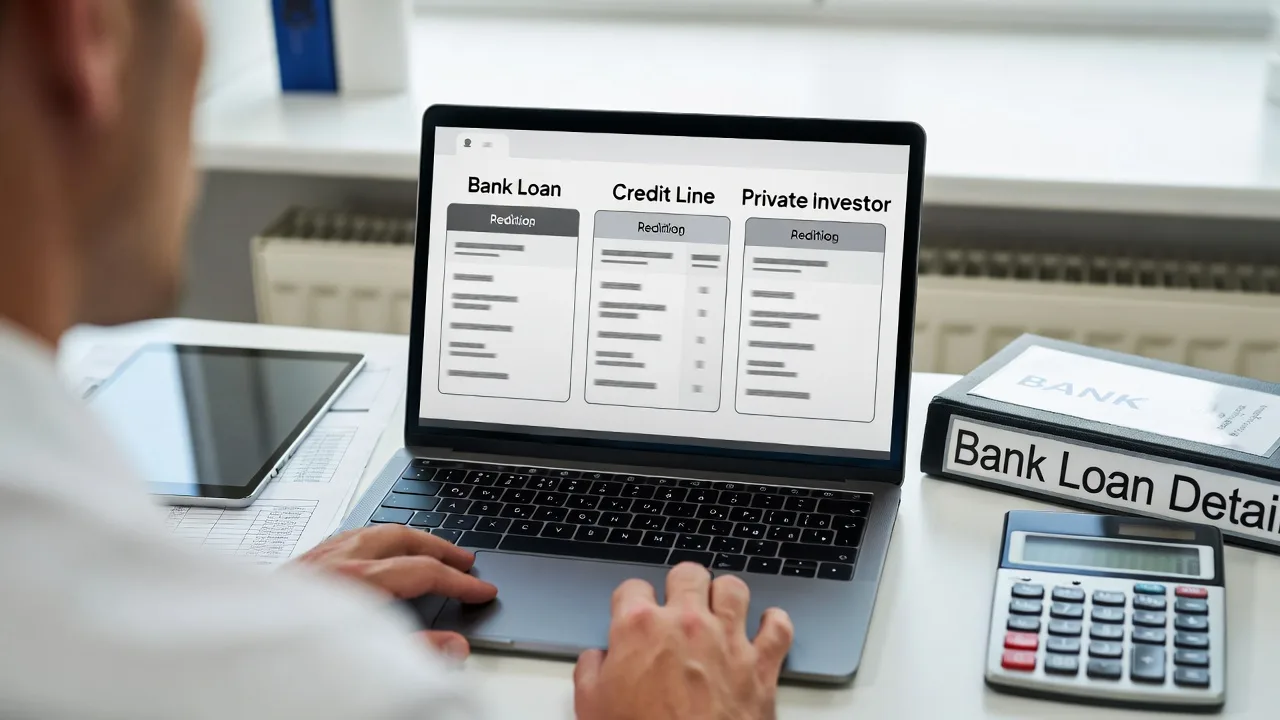
SBA Loans vs. Traditional Bank Loans vs. Online Lenders
Each loan type fits different situations. Here’s what to expect:
| Loan Type | Approval Time | Interest Rates | Loan Amounts | Best For |
|---|---|---|---|---|
| SBA 7(a) Loan | 60-90 days | 6%-9% | Up to $5 million | Established businesses needing large amounts with lower rates and longer terms |
| Traditional Bank Term Loan | 30-45 days | 5%-8% | $50,000-$500,000 | Strong credit, two+ years operating, collateral available, not in a rush |
| Online Lender Term Loan | 1-7 days | 10%-30% | $5,000-$500,000 | Speed matters more than cost, credit under 680, business under two years |
| Bank Line of Credit | 20-30 days | 5%-10% (variable) | $10,000-$250,000 | Ongoing working capital, seasonal revenue fluctuations, emergency cushion |
| Equipment Financing | 5-10 days | 6%-12% | Up to equipment value | Buying machinery, vehicles, or technology; equipment serves as collateral |
Your urgency, qualifications, and purpose determine the right choice. Buying a $40,000 delivery van? Equipment financing funds in a week and finances 100% of the cost. Opening a second location? An SBA loan’s lower rate justifies the 90-day wait when you’re borrowing $250,000.
Documentation Checklist
Organize these before you start applications—lenders who wait three days for your bank statements move on to the next applicant:
- Financial statements: Balance sheet, profit and loss, cash flow statement (minimum two years, three is better)
- Tax returns: Business returns and personal returns for all major owners (past two to three years)
- Bank statements: All business accounts—checking, savings, merchant accounts (most recent three to six months)
- Legal documents: Articles of incorporation, LLC operating agreement, DBA filings, business licenses
- Business plan: Executive summary, competitive analysis, market research, three-year financial projections
- Use of funds breakdown: Exact itemization of how you’ll spend every dollar borrowed
- Personal financial statement: Complete asset and liability list with values for each owner
- Receivables and payables aging reports: If your business invoices customers or carries inventory
- Commercial lease: Current lease agreement for your business location
- Key personnel resumes: Background on owners and critical managers
Store everything in a shared drive folder so you can send documents within minutes of a lender’s request. Fast responses move you to the front of the underwriting queue.

Real Examples of Small Business Loan Success and Failure
Success story: HVAC expansion in Denver. A heating and cooling contractor had been operating for four years with steady $800,000 annual revenue and a team of five technicians. They were turning away 20-30 service calls weekly because they’d maxed out capacity. In spring 2025, they secured a $120,000 SBA loan to purchase two additional service trucks plus diagnostic equipment.
The new capacity let them handle 40% more calls. Revenue jumped to nearly $1.2 million in year one. The $2,200 monthly loan payment was easily covered by the extra profit margin. Eighteen months later they’d hired three more techs and were already planning another loan to expand further. The loan solved a true growth constraint.
Success story: E-commerce seasonal stocking. An online pet supply seller had three years of sales data showing consistent holiday season spikes. They knew within 8% accuracy what they’d sell November through December. In September 2024, they took a $50,000 short-term loan to stock inventory early.
They negotiated net-60 payment terms with suppliers, meaning supplier invoices came due after holiday sales wrapped up. The inventory sold through in nine weeks as projected. After repaying the loan and covering costs, they netted $18,000 additional profit and grew their customer list by 30%. The loan used hard data, not hope.
Failure story: Restaurant trying to survive. A café that had been struggling for months borrowed $75,000 from an online lender at 24% APR. The owner hoped having cash would let them “wait out the slow period” until business improved. They had no specific plan to increase revenue—just optimism.
Revenue didn’t increase. Now they had a $2,800 monthly loan payment on top of existing expenses. Cash flow got worse, not better. Nine months later they defaulted. The lender seized their espresso machines and refrigeration equipment. The business closed. Because the owner had personally guaranteed the loan, his wages were garnished for the next three years. The loan didn’t solve the underlying problem—it just delayed and worsened the inevitable.
Failure story: Boutique’s bad expansion. A successful suburban mall boutique borrowed $200,000 to open a second location downtown. Sales at the original store ran strong—$60,000 monthly with good margins. The owner assumed a downtown spot would do even better.
She didn’t research foot traffic patterns. Didn’t analyze competition. Didn’t test the market with a popup first. The downtown location never broke $25,000 monthly—not enough to cover rent and staffing. It drained resources from the profitable original location. Both stores closed within 22 months. Personal bankruptcy followed because she’d guaranteed the loan.
The difference between winners and losers? Winners borrowed to solve specific, proven problems. Losers borrowed hoping money itself would fix things.

Alternatives to Small Business Loans Worth Exploring
Debt isn’t your only option. Sometimes these work better:
Business credit cards for smaller needs. If you need $5,000-$50,000, business cards offer flexibility plus rewards. Many provide 0% introductory APR for 12-18 months—essentially free money if you pay the balance before the promo expires. Great for ongoing smaller purchases and building business credit. Not great if you lack discipline to pay them off.
Lines of credit instead of term loans. Unlike loans that hand you a lump sum, lines of credit let you draw money as needed. You only pay interest on what you actually use. A $100,000 line might cost $100 monthly when unused but gives instant access when opportunities pop up. Perfect for seasonal businesses and managing cash flow ups and downs.
Leasing equipment rather than buying. Leasing requires little upfront cash. Some agreements include maintenance. Monthly costs stay predictable, and you can upgrade to newer equipment when leases end. The tradeoff? Higher total cost over time and you never own the asset. Makes sense for technology that becomes obsolete quickly.
Business grants that don’t need repayment. Federal programs like SBIR/STTR provide research and development grants. State governments offer grants targeting specific industries or underserved areas. The catch? Competition is brutal, applications take 40+ hours, and approval rates run under 5%. But free money is worth the effort if you qualify.
Crowdfunding to pre-sell and validate. Kickstarter and Indiegogo let you pre-sell products or offer rewards to raise capital. This proves market demand before you invest heavily. Equity crowdfunding through Republic or StartEngine gives investors ownership stakes instead of requiring repayment. Works for products with strong stories, not for most service businesses.
Angel investors or venture capital for high-growth potential. If your business could scale nationally, investors might provide capital for equity stakes. No monthly payments, but you give up ownership and control. Realistically, this works for tech startups and scalable products—not local service companies or traditional retail.
Supplier financing and payment terms. Some suppliers offer 90-day payment terms or installment plans on large orders. A restaurant equipment supplier might let you pay over 12 months, essentially providing interest-free or low-cost financing. Always ask—worst they can say is no.
Retirement account rollovers through ROBS. You can invest 401(k) funds in your business without tax penalties using ROBS (Rollovers for Business Startups) arrangements. Complex to set up, requires ongoing compliance, and puts your retirement at risk—but provides capital without debt or giving up equity.
Each alternative has downsides. Lines of credit need strong credit and may have variable rates. Grants take six months or more to secure. Equity financing means sharing profits and losing autonomy. Compare multiple options against loans before deciding.
Traditional banks draw a line at 680, with rates improving significantly once you cross 720. SBA loans might work with scores down to 640, but only if your financials look really strong and you’ve got solid collateral. Online lenders sometimes approve scores in the 600-640 range, though you’ll pay dearly—expect 18-30% interest rates. Drop below 600 and you’re pretty much out of options except predatory lenders charging 40%+ (avoid them). Sitting at 675? It might be worth spending three months improving your score to 700+ before applying. Every 20-point increase unlocks better terms and lower rates. Timeline varies wildly by lender. Online lenders can approve and fund in 24-48 hours if your application is complete and straightforward. Traditional banks usually take 30-45 days from application to money in your account. SBA loans are slowest at 60-90 days because of the government guarantee process and heavier documentation requirements. These timelines assume complete applications. Missing documents add weeks, not days. One applicant I know waited 70 days for bank approval because they kept forgetting to send updated bank statements. Another got online funding in 36 hours because everything was organized before they started. Your organization matters as much as the lender’s speed. Nothing good. The lender starts with late fees and penalty interest, which compound fast. They’ll attempt collection through calls and letters. If you signed a personal guarantee—and most small business loans require them—they can go after your personal assets: bank accounts, home equity, vehicles, investment accounts. They may file a lawsuit resulting in wage garnishment or property liens. Your credit score tanks 100+ points, sometimes more. That stays on your credit report for seven years, making future borrowing expensive or impossible. It affects lease applications, insurance rates, even some job opportunities. If you pledged collateral, they’ll seize and sell it. Severe cases end in personal bankruptcy, which haunts your credit for 7-10 years and appears on public records. SBA loans win on terms but lose on speed. They offer interest rates 1-2% lower than conventional bank loans, repayment terms up to 25 years (versus 5-10 for bank loans), and down payments as low as 10%. The SBA guarantee makes approval easier for businesses that don’t quite meet traditional bank standards. But SBA loans take 60-90 days to close versus 30-45 for bank loans. They require more documentation. You’ll pay SBA guarantee fees of 2-3.75% of the loan amount upfront. If you’re not in a rush and want the best possible terms, SBA loans usually win. Need money fast? A traditional bank loan cuts approval time in half. Have excellent credit and strong financials? You might get bank rates almost as good as SBA without the wait.FAQs
Small business loans either accelerate growth or accelerate failure—the loan itself doesn’t determine which. Your business fundamentals, planning, and how you use the capital make all the difference.
Winners borrow when they’ve got stable revenue, solid credit, and a detailed plan showing how borrowed money generates measurable returns. They understand requirements, prepare documentation before applying, and choose lenders matching their situation—whether that’s a slow SBA process for the best rates or a fast online lender when timing matters more than cost.
Before you sign anything, stress-test your assumptions. Revenue drops 25%—can you still make payments? What’s your backup plan? Map out worst-case scenarios. Businesses that succeed with loans borrow conservatively, deploy funds strategically, and maintain cash cushions for surprises.
If your numbers work, the opportunity is genuine, and you can afford payments even during a rough quarter, a loan might be exactly what moves your company forward. If you’re borrowing out of desperation or can’t explain precisely how you’ll repay it, explore the alternatives first. Future you will be grateful.